Last week was a busy week for the Court of Justice (read here and here). A third judgment worth mentioning is the Dowling and Others judgment (read here). This judgment concerns the position of shareholders (of institutions of systemic importance) in times of financial crisis. Continue reading “When the Going Gets Tough, the Shareholders Get Going”
Month: November 2016
Commercial Law Centre Webinar (University of Oxford)
The Commercial Law Centre (University of Oxford) hosts a series of interesting webinars. Previous webinars dealt with principles of cross-border insolvency law (Reinhard Bork) and form and substance in the determination of property rights (Anthony Duggan). Continue reading “Commercial Law Centre Webinar (University of Oxford)”
All creditors are equal, but some creditors are more equal than others
Les biens du débiteur sont le gage commun de ses créanciers, et le prix s’en distribue entre eux par contribution, à moins qu’il n’y ait entre les créanciers des causes légitimes de préférence
Article 8 Belgian Loi Hypothécaire (art. 2093 French Civil Code) contains the basic principle of paritas creditorum. All creditors have an equal right to payment and the proceeds of the debtor’s estate shall be distributed in proportion to the size of their claims. The principle of equality is, however, not absolute. Secured and preferred creditors jump the queue, and are paid before ordinary creditors. The pari passu principle still is a bedrock principle of insolvency law. In reality, however, the rule has gradually become the exception (read about the pari passu myth, here). Ordinary creditors are left with peanuts once secured and preferred creditors are paid. All creditors are equal, but some creditors are more equal than others, indeed. Continue reading “All creditors are equal, but some creditors are more equal than others”
The Insolvency Regulation (case-law)
Enefi – article 4 Regulation 1346/2000

In its recent Enefi judgment (C‑212/15, read here, no English translation available yet) the Court of Justice interpreted article 4 of Regulation 1346/2000. The judgment illustrates the shifting boundaries of the framework underlying the Insolvency Regulation.
Sovereign Debt Restructuring and International Law
The Max Planck Institute Luxembourg for International, European and Regulatory Procedural Law organises a series of lectures on sovereign debt (see here). In the absence of an international legal framework, the process of sovereign debt structuring remains fragmented and uncertain. This is best illustrated by the decade and a half of litigation that followed Argentina’s sovereign bond default in 2001 (read here).
The first two lectures (“The Law and Economics of Sovereign Debt and Default” and “Sovereign Debt Restructuring and International Law”) can be found here.
Whose interests are served by the corporate interest?
New shots fired in the ‘shareholders’ vs ‘stakeholders’ war
An international group of corporate law professors has issued a “Modern Corporation Statement on Company Law“, a peculiar two page document which describes itself as a “summary of certain fundamentals of corporate law, applicable in almost all jurisdictions, in an effort to help prevent analytical errors which can have severe and damaging effects on corporations and corporate governance.”
Their 10th and last statement is: Continue reading “Whose interests are served by the corporate interest?”
The High Court of England and Wales approves Nortel’s global settlement
In a previous post (Everybody loses … except the lawyers) the settlement in the bankruptcy liquidation of Nortel Networks Corp was announced. Last week, the High Court of Justice approved this settlement. The judgment can be read here.
What do Colonialism and Pizza Delivery Policies Have to Do with the Wells Fargo Scandal?
Jennifer Hill (Sidney Law School) on Oxford Business Law Blog
“Any economist will tell you that incentives matter in understanding human behaviour. The positive incentives provided to the Dutch managers confirm this – they helped to put the Netherlands ahead of the rest of the colonialist pack during the 17th century. But organizational incentives are not always positive. Fast forward three centuries and the story of Domino’s Pizza Inc provides a good example of how organizations can create perverse incentives.”
See post here.
De nieuwe kleren van de keizer
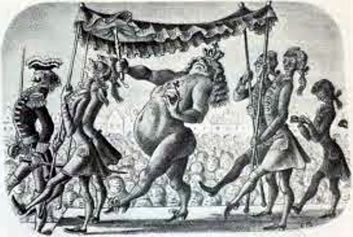
In een vonnis van 31 oktober 2016 heeft de rechtbank van koophandel te Antwerpen de homologatie van het reorganisatieplan van de NV Corsan geweigerd. In een aantal vonnissen van dezelfde datum werd eveneens de homologatie van de reorganisatieplannen van met de NV Corsan verbonden (project)vennootschappen geweigerd. Over de achtergrond van deze zaken is voldoende verslag gedaan in de (financiële) pers. De NV Corsan had zich toegelegd op de productie van films, o.a. het historische epos Emperor, gebruik makend van de fiscaal gunstige tax shelter-regeling. Een dispuut over de toepassing van deze regeling lag mede aan de grondslag van de financiële problemen van de schuldenaar. Continue reading “De nieuwe kleren van de keizer”
Blog Amicorum – Professor Michel Flamée (VUB)
Bijdragen uit Liber Amicorum van Prof. Dr. M. Flamée online beschikbaar
Zie het overzicht van de bijdragen hier. Zie voor een biografie van Professor Flamée hier. Interesseerden ons onder meer: Continue reading “Blog Amicorum – Professor Michel Flamée (VUB)”
‘You can’t dance at two weddings with one behind’ (Yiddish proverb)
The uneasy dual role of creditor and shareholder

1.
A previous post mentioned the rudimentary rule on distributions in the ‘partnership en commandite’ (limited liability partnership) in article 206 of the Belgian Company Code (‘BCC’), dating back to 1873:
“Third parties can force [the limited partner] to return any interest or dividends distributed to him, if such distributions are not taken from the non-fictitious profits of the partnership. The unlimited partner has recourse against the manager for any distributions he had to return, in case of fraud, bad faith or serious negligence by the manager.”
Today we discuss how one word in this antique (yet inspiring) rule foreshadows a topical subject: Continue reading “‘You can’t dance at two weddings with one behind’ (Yiddish proverb)”
 Corporate Finance Lab