Op 1 januari 2026 treedt boek 9 titel 1 BW in werking. Zoals bekend wordt daarbij het beschermingsregime voor de ‘kosteloze borg’ vervangen door dat van de ‘consumentenborg’. Hier wil ik kort bekijken wat dit betekent voor persoonlijke zekerheden gesteld door een insider (bestuurder, aandeelhouder) voor schulden van een vennootschap.
Art. 9.1.42 al. 1 BW verwijst vooreerst voor de definitie van consument naar art. I.1, 2° WER: “iedere natuurlijke persoon die handelt voor doeleinden die buiten zijn handels-, bedrijfs-, ambachts- of beroepsactiviteit vallen”. Deze definitie, hoewel anders geformuleerd, vormt een zwaluwstaartverbinding met de correlatieve functionele definitie van een onderming als secundair ondernemingsbegrip dat het aanknopingspunt vormt voor enkele boeken van het WER (“duurzaam een economische doel nastreven” – zie bv. art. I.6, 12° of I.8, 39° WER). De definitie van consument is altijd situationeel te bekijken voor de betrokken handeling. Een natuurlijke persoon die onderneming is (in formele of in functionele zin- breviter: een zelfstandige), kan dus voor bepaalde handelingen als consument worden beschouwd. De hoedanigheid op het ogenblik van de zekerheidstelling is relevant. De schuldeiser draagt de bewijslast dat de persoonlijke zekerheidsteller geen consument is voor doelstellingen van boek 9 (art. 9.1.43 al. 4 BW).
Deze definitie maakt dat bestuurders die zich persoonlijk zeker stellen voor hun vennootschap geen beroep kunnen doen op de bescherming voor consumentenborgen. Diensten gesteld door een natuurlijke persoon als vennootschapsmandataris als zelfstandige (en niet als werknemer in ongeschikt verband) worden beschouwd als een professionele activiteit (J. Vananroye en K.-J. Vandormael, “Boek I WER en Wet Natuurlijke Rechter: van handelsrecht naar ondernemingsrecht”, in Het Wetboek van economisch recht: van nu en straks?, 26, nr. 21; J. Vananroye, Leerstukken ondernemingsrecht, Intersentia, 2020, 32, nr. 38.). Een persoonlijke zekerheid door een bestuurder voor een schuld van zijn vennootschap is geen handeling die buiten zijn professionele activiteit valt.
De (betwistbare) cassatie-rechtspraak met een bijkomende ‘organisatie-voorwaarde voor bestuurders als onderneming kunnen worden gekwalificeerd is hier irrelevant: deze rechtspraak gaat over het formele ondernemingsbegrip van art I,1, 1° WER (Zie o.m. in voltallige zitting van de eerste kamer: Cass. 23 november 2023, TRV/RPS, 2024/3, 262, noot I. Vanwalleghem en N. Appermont: “De kwalificatie van bestuurders als onderneming: Errare humanum est, sed perseverare…”). Voor doeleinden van boek 9 speelt het begrip consument (met het functionele ondernemingsbegrip als correlatief en tegengesteld begrip). Voor een bestuurder als zelfstandige zijn bestuursmandaat uitoefent, kan er weinig twijfel zijn dat dit het beschermingsregime van de consumentenborg uitsluit. Zo ook J. Baeck en J. Marchau, “Wetsvoorstel persoonlijke zekerheid: van kosteloze borgtocht naar consumentenborgtocht”, RW 2024-25, 1246, weliswaar m.b.t. de oorspronkelijke formulering van het wetsvoorstel dat sprak over de afwezigheid van een ‘functionele band’.
Dat beschermingsregime kan wel van toepassing zijn op een bestuurder van een VZW die zijn mandaat niet als zelfstandige uitoefent (bv. als de VZW niet is onderworpen aan de vennootschapsbelasting en het mandaat on- of laagbezoldigd wordt uitgeoefend).
Of de betrokken bestuurder al dan niet een substantiële invloed heeft op de gepatroneerde vennootschap is niet bepalend. Dit criterium is een bijkomende reden om het beschermingsregime uit te sluiten indien de hoofdschuldenaar een rechtspersoon is, maar moet pas onderzocht worden indien de zekerheidsteller onder de gewone definitie van consument valt. Dat is voor de vennootschapsbestuurder dus niet het geval.
Indien de hoofdschuldenaar een rechtspersoon is, de bescherming van de consumentenborg bovendien niet van toepassing op de zekerheidsteller (ook al is die een consument in de gebruikelijke definitie) indien deze een substantiële invloed kan uitoefenen op de besluitvorming van die rechtspersoon.
De verantwoording bij het relevante Amendement 11 verwijst hiervoor naar o.m. naar het begrip controle in art. 1:14 en 1:18 WVV. Art. 1:14 § 1 WVV definieert controle als “de bevoegdheid in rechte of in feite om een beslissende invloed uit te oefenen op de aanstelling van de meerderheid van bestuurders of zaakvoerders of op de oriëntatie van het beleid”. Ik begrijp die verwijzing zo dat als er controle is in de zin van het WVV, er evident sprake is van een substantiële invloed in de zin van boek 9 BW. Ook als er gezamenlijke controle is, is er een substantiële invloed. Onder gezamenlijke controle wordt begrepen “de controle die een beperkt aantal vennoten samen uitoefenen, wanneer zij zijn overeengekomen dat beslissingen over de oriëntatie van het beleid niet zonder hun gemeenschappelijke instemming kunnen worden genomen” (art. 1:18 al. 1 WVV).
Uit de afwezigheid van controle in de zin van het WVV moet echter niet noodzakelijk de afwezigheid van een substantiële invloed worden afgeleid. In de gewone betekenis van deze woorden ligt de drempel voor dat laatste begrip ligt lager. Te denken valt aan de hypothese van enkele aandeelhouders die elk apart geen controle hebben, die ook geen formele overeenkomst hebben die toelaat te besluiten tot gezamenlijke controle, maar die op het ogenblik van de zekerheidstelling de oriëntatie vanhet beleid wel samen sturen. In zo’n geval lijkt er me ook sprake van substantiële invloed van elk van die aandeelhouders.
Anders dan het oude recht stelt boek 9 de controle en niet het economisch voordeel voorop. Hieruit kan worden afgeleid dat een samenwonende partner van een aandeelhouder of bestuurder wel beroep kan doen op de bescherming voor de consument-borg, wat ondere het oude recht was betwist. Zie de verantwoording bij het relevante Amendement nr. 11 (Parl. St. Kamer 2024, 0261/002, p. 14): “Het is met de voorgestelde regeling duidelijk dat het loutere feit dat er een huwelijksrelatie of andere samenwoningsvorm bestaat tussen de hoofdschuldenaar en de borg dan wel tussen de bestuurder of aandeelhouder van de rechtspersoon die hoofdschuldenaar is en de borg, op zichzelf aan deze laatste de bescherming van de regels uit de consumentenborg niet ontneemt. Het feit dat de borg in het kader van de samenwoningsrelatie diensten verricht voor de hoofdschuldenaar of diens vennootschap, ontneemt evenmin deze bescherming. Indien een echtgenoot bijvoorbeeld administratieve taken of de boekhouding doet voor de vennootschap van de andere echtgenoot, betekent dit niet noodzakelijk dat de borg een substantiële invloed op de vennootschap kan hebben.”
Eén passage uit de verantwoording bij het relevante Amendement nr. 11 creëert meer mist dan klaarheid:
“Het feit dat de borg bestuurder is binnen de hoofdschuldenaar/rechtspersoon ontneemt hem of haar in beginsel wel de bescherming, tenzij in concreto zou worden aangetoond dat de borg geen enkele feitelijke of juridische zeggenschap kan hebben, bv. omdat het bestuursmandaat enkel is ingesteld om een consumentenborg te vermijden of omdat de feitelijke bestuurder van de hoofdschuldenaar een beroepsverbod heeft gekregen. Hetzelfde geldt voor een feitelijke bestuurder bij wie de kwalificatie als feitelijke bestuurder is erkend door een rechter.” (Amendement nr. 11, Parl. St. Kamer 2024, 0261/002, p. 14.)
Waar weinig discussie over kan bestaan is dit:
- Wie formeel bestuurder is kan in de regel niet genieten van de bescherming van de consumentenborg.
- Wie de facto bestuurder is (waarbij dit mandaat niet wordt gepubliceerd, bv. omwille van een beroepsverbod) kan niet genieten van de bescherming van de consumentenborg. Zo’n persoon zal overigens in de regel ook een ‘substantiële invloed’ hebben.
Waar ik wel moeite mee heb in de verantwoording, is de suggestie dat een bestuurder zou kunnen aantonen dat hij slechts een sham bestuurder is om wel te kunnen genieten van de bescherming van de consumentenborg.
Dat kan gevolgd worden als de betrokken zekerheidsteller op vraag van de schuldeiser enkel bestuurder is geworden om te ontsnappen aan de regels inzake consumentenborg en het voor alle betrokken duidelijk is dat deze bestuurstaak in realiteit niet zal worden uitgevoerd. Het is geen geheim dat financiers soms zeer creatief zijn bij het omzeilen van het beschermingsregime voor natuurlijke personen. Uit de context van de verantwoording lijkt het dat de wetgever hier vooral denkt aan partners van echte bestuurders (die onder de nieuwe regels zoals gezegd dus duidelijk wel onder het beschermingsregime vallen). In dat geval geldt de regel dat tussen partijen de ‘tegenbrief’ (de werkelijke toestand) en niet de gesimuleerde toestand moet worden toegepast (art 5.39 al. 2 BW).
Anders is het voor bv. een stroman van een werkelijke bestuurder getroffen door een beroepsverbod. Het lijkt me ondenkbaar dat deze stroman zich op deze geveinsde toestand kan beroepen om te kunnen genieten van het beschermingsregime, indien de schuldeiser hier niet desbewust aan heeft meegewerkt. Derden te goeder trouw hebben immers de optie om zich te beroepen op de geveinsde toestand (art. 5.39 al. 3 BW).
In géén geval mag uit deze passage worden afgeleid dat een bestuurder-zekerheidsteller kan aantonen dat hij geen substantiële invloed heeft – bv. omdat hij maar één van de velen is – om te kunnen genieten van de bescherming van de consumentenborg. De verantwoording bespreekt deze ontsnappingsweg duidelijk in de context van veinzing en spreekt van “geen enkele feitelijke of juridische zeggenschap.”
* *
*
De conclusie is dat dit beschermingsregime voor persoonlijke zekerheden voor schulden van vennootschappen in de praktijk een eerder zeer beperkte draagwijdte zal hebben.
Dat was niet anders ondere het oude recht voor ‘kosteloze’ borgen. De borgtocht werd geacht ‘kosteloos’ te zijn wanneer enig economisch voordeel ontbreekt, zowel rechtstreeks als indirect, dat de borg kan genieten dankzij de borgstelling. Die kosteloosheid werd in de regel niet aanvaard bij persoonlijke zekerheden door insiders voor hun vennootschap (Zie uitgebreid en kritisch M.E. Storme, Persoonlijke zekerheden en aanverwante rechtsfiguren, 56-60). Hoewel het begrip ‘kosteloos’ hiermee werd gerekt (ibid., 59), spoort het wel met het idee dat persoonlijke zekerheden door vennootschapsinsiders met minder argwaan mogen worden bekeken dan die ten voordele van bv. familieleden of vrienden.
De persoonlijke zekerheid door de insider (natuurlijk persoon, rechtspersoon of andere organisatie) van een vennootschap is immers van een andere orde dan persoonlijke zekerheden in andere situaties, voor economische ‘echte derden’. De zekerheidsteller zal doorgaans de controle hebben over de hoofdschuldenaar en heeft ook een direct belang bij diense financiële situatie. In de feiten identificeert de controlerende aandeelhouder zich sterk met de vennootschap die economisch niet echt een derde is. Men zou kunnen zeggen: bij een vennootschap met beperkte aansprakelijkheid is het de niet-aansprakelijkheid van de controlerende aandeelhouder voor een activiteit die hij controleert en waarvan hij de vruchten plukt, die eigenaardig is. Een persoonlijke zekerheid van die aandeelhouder is slechts een terugkeer naar de normale aansprakelijkheid van een ondernemer die geen vennootschap gebruikt of een moedervennootschap die geen dochtervennootschap heeft.
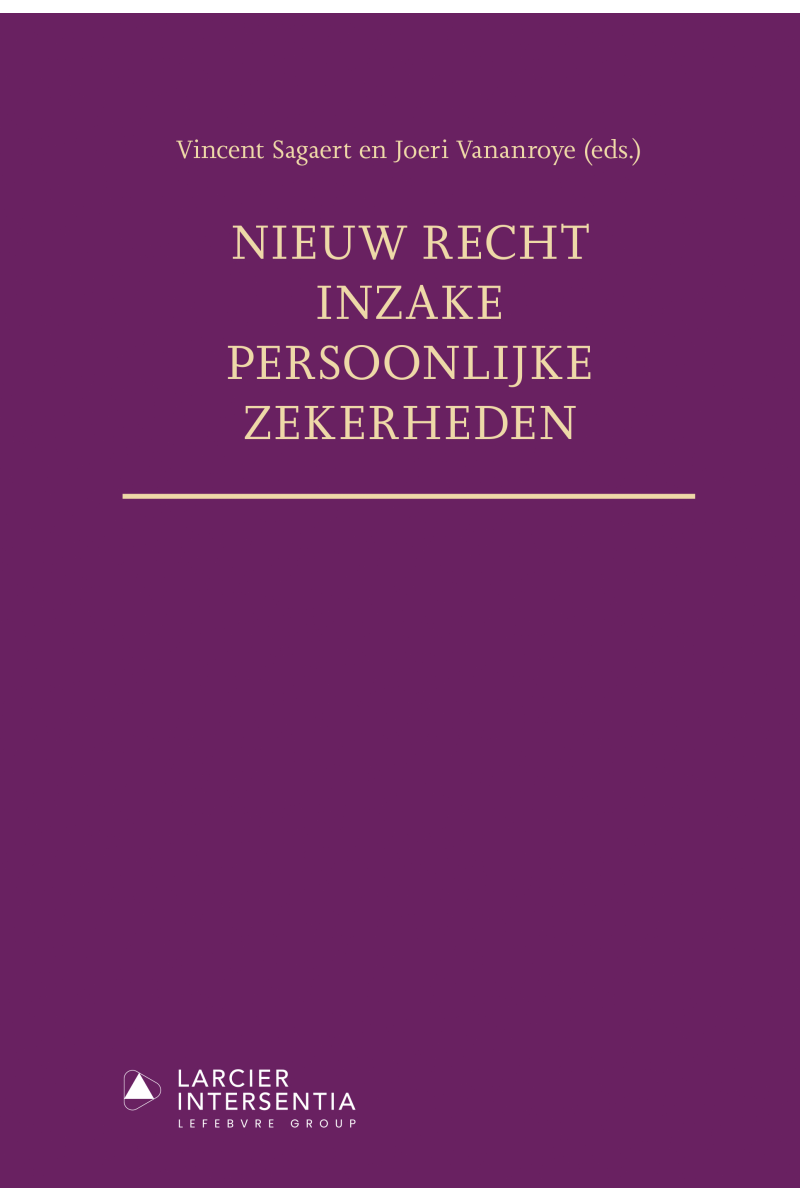
Daarmee is niet gezegd dat er geen bescherming speelt bij persoonlijke zekerheidstellers die niet onder de consumentenborg vallen. Dit wordt verder uitgewerkt in J. Vananroye, “Hoofdelijkheid tot zekerheid, sterkmaking tot nakoming en patronaatsverklaringen”, in Nieuw recht inzake persoonlijke zekerheden, te verschijnen begin 2026 en nu reeds te bestellen via de website van Intersentia. Dit boek geeft een grondige analyse van de nieuwe regels, met bijdragen van Marieke Wyckaert, Vincent Sagaert, Matthias Storme, Dominique Blommaert, Prescillia Algrain, Willem Possemiers, Charles-Antoine Leunen en Joeri Vananroye.
Joeri Vananroye





 Corporate Finance Lab