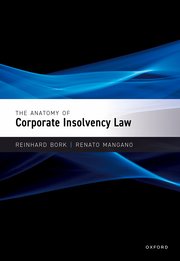
The Anatomy of Corporate Insolvency Law (Bork & Mangano)

A post by professor Reinhard Bork

Modern insolvency law has nothing in common with the grim reality depicted in certain Victorian novels of debtors subjected, not to insolvency proceedings, but to imprisonment even for indefinite periods. Since then, however, insolvency law has become a subject of extraordinary relevance and increasing intellectual fascination.

On the one hand, academics, policymakers, lawmakers, judges, and practitioners have reoriented this field of law in order to facilitate the rescue of distressed companies for as long as possible. On the other hand, this evolution has reshaped some of the most traditional categories of our legal culture. For example, this new deal has introduced into the toolbox of insolvency practitioners a great number of devices that combine the flexibility of contractual workouts with the capability of insolvency proceedings to bind even the most recalcitrant of creditors – as a result, in some cases the traditional distinction between “contract” and “proceedings” has blurred. The same tendency in favour of rescue has persuaded some lawmakers to enable distressed companies to depart from the traditional criteria according to which the debtor’s assets must be distributed – traditionally, these criteria were considered as non-negotiable – and even to waive a milestone of every company law according to which a company’s shareholders are the company’s residual claimants. A further consequence of this new approach is that in the case of group insolvencies there has been a tendency to mitigate the traditional single-entity approach according to which there ought to be one set of insolvency proceedings for each distressed company.

This finding does not relate to the insolvency law of a specific state, but to the world of all insolvency laws as a whole. Against this background, it can be an appealing task not to present and analyse a very specific insolvency law, but to ask a group of internationally outstanding scholars to examine certain core issues of insolvency law from an overarching, quasi supra-national perspective. Together with my co-editor Renato Mangano, I have now taken on this task in the book The Anatomy of Corporate Insolvency Law (Oxford University Press 2024).

Continue reading “The Anatomy of Corporate Insolvency Law (Bork & Mangano)”

Kunnen de statuten van een NV voorzien in een flexibele omschakeling tussen een raad van bestuur en een enige bestuurder, zonder nieuwe statutenwijziging?

Een post door gastblogger Carl Clottens (Eubelius, KU Leuven)

Sinds het WVV zijn er in de NV drie bestuursmodellen mogelijk: een klassieke, collegiale raad van bestuur bestaande uit minstens drie (of uitzonderlijk twee) bestuurders (zgn. monistisch bestuur), een enige bestuurder of een duaal bestuur bestaande uit een raad van toezicht en een directieraad. De vraag of een flexibele omschakeling mogelijk is van een raad van bestuur naar een enige bestuurder of omgekeerd, zonder een nieuwe statutenwijziging maar bv. louter door het ontslag of de benoeming van bestuurders, is sinds de invoering van het WVV voorwerp van discussie.

Volgens een deel van de rechtsleer moet een NV uitdrukkelijk en ondubbelzinnig kiezen voor één van de drie bestuursmodellen en is het niet mogelijk om een facultatieve clausule op te nemen die voorziet in de omschakeling van het bestuursmodel met één bestuurder naar een raad van bestuur (of omgekeerd) afhankelijk van de vraag of één of meer bestuurders worden benoemd of in functie blijven, zonder wijziging van de statuten[1].

Een andere strekking aanvaardt dergelijke mogelijkheid wel, onder meer onder verwijzing naar de BV, waar deze flexibiliteit sinds lang bestaat[2].

Hoewel controversieel, is het gebruik van dergelijke facultatieve clausules in de NV intussen wijdverspreid.

In een recent advies nr. 2023/004 van 21 juni 2024 besluit het Adviescomité inzake Vennootschappen en Verenigingen (CASAVV)[3], na een uiteenzetting van de twee strekkingen, dat de huidige wettekst niet toelaat om deze discussie te beslechten.

Continue reading “Kunnen de statuten van een NV voorzien in een flexibele omschakeling tussen een raad van bestuur en een enige bestuurder, zonder nieuwe statutenwijziging?”

Weg met de botte bijl in de geschillenregeling

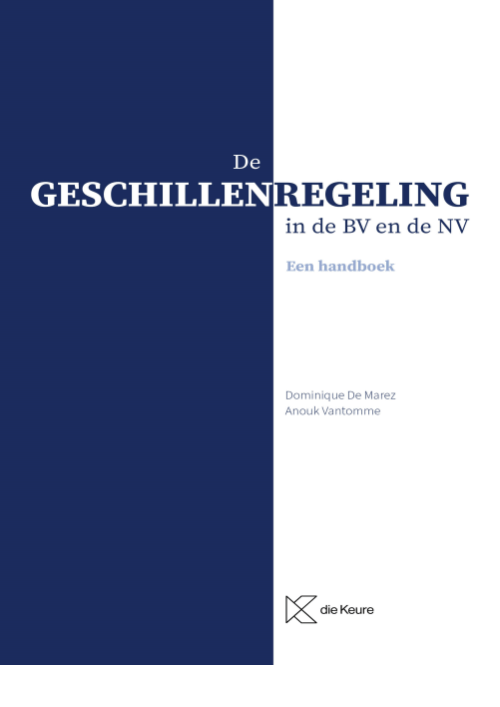
Zopas verscheen bij die Keure De geschillenregeling in de BV en de NV. Een handboek van Dominique De Marez en Anouk Vantomme. Hierna volgt bij wijze van exclusief voorproefje een uiteenzetting over één van de heikele topics waarover de auteurs in het boek een duidelijk standpunt innemen.   

1.

De wijze waarop de prijs wordt bepaald bij de gedwongen overdacht van effecten die wordt bevolen in het raam van een geschillenregeling staat vaak in schril contrast met de precisie en de zin voor evenwicht die wordt gehanteerd bij een vrijwillige, conventionele aandelenoverdracht. Waar er bij een conventionele overdracht vaak “specific indemnities” of andere contractuele mechanismen worden voorzien om de impact van eventuele toekomstige en onzekere gebeurtenissen op de waarde van de effecten te regelen, is dat bij een geschillenregeling niet het geval.  

Continue reading “Weg met de botte bijl in de geschillenregeling”

A European Central Bank Standing Guard over a European Currency Union

A post by guest blogger Jan Meyers (Cleary Gottlieb)

            A good while ago, in the late 1970s and early 1980s, I wrote my doctoral thesis at Stanford about the possible design of a more integrated European monetary system. It was then still a somewhat nebulous prospect amidst experiments with semi-fixed exchange rate arrangements between participating European currencies (the “snake-in-the-dollar-tunnel”, then “le serpent dans l’espace” and, eventually, ERM I) following the unravelling of the Bretton Woods gold-dollar standard. Fast forward to the present: a genuine European central bank has been standing guard over a genuine European currency union for 25 years, steering it through a succession of turbulences. It has been and continues to be a fascinating story, with several plot twists and an abundance of intriguing questions. I could not resist the temptation of writing another book about it. It has actually been a joy writing it.

            The book revisits the architecture of the European currency union as it continues to evolve in Europe’s incomplete EMU and now faces today’s concurrent challenges posed by government debt sustainability concerns and the considerable public expenditures, investments and reforms needed in particular to address climate change and the green transition, population ageing, the changing landscape of global trade and the rebuilding of credible defense capability.

Continue reading “A European Central Bank Standing Guard over a European Currency Union”

Zijn ziekenfondsen en landsbonden van ziekenfondsen onderworpen aan de patrimoniumtaks?

Een post door gastblogger Dirk Deschrijver

1. In artikel 147 W.Succ. staat dat “de verenigingen zonder winstoogmerk, de internationale verenigingen zonder winstoogmerk en de private stichtingen, beheerst door het Wetboek van vennootschappen en verenigingen” vanaf 1 januari volgend op de datum van hun oprichting onderworpen zijn aan een jaarlijkse taks tot vergoeding van de successierechten.[1] Deze bepaling gaat terug op artikel 44, lid 1 van de wet van 27 juni 1921[2] waarin stond: “De vereenigingen zonder winstgevend doel en de instellingen van openbaar nut zijn onderhevig aan eene jaarlijksche belasting.” Het ging toen om de invoering van een jaarlijkse “taxe tot vergoeding der successierechten” ten belope van 0,10% op het brutovermogen van die lichamen. Vrijstellingen van die belasting werden toen niet voorzien. Daarentegen was er bijv. in artikel 2, § 1 van de wet van 17 oktober 1945[3], welke een éénmalige belasting van 5% op het kapitaal invoerde, wel sprake van een vrijstelling ten behoeve van “erkende mutualiteitsverenigingen.”[4]

Continue reading “Zijn ziekenfondsen en landsbonden van ziekenfondsen onderworpen aan de patrimoniumtaks?”

Remuneration of independent directors in shares

A post by guest blogger Pieterjan Heynen

Based on the annual reports of Belgian listed companies, Guberna and VBO recently conducted a study in order to determine to what extent the recommendations of the Belgian Corporate Governance Code are being observed. Particular attention was paid to Recommendation 7.6, a relatively new provision which was introduced into the Code in 2020. This Recommendation states that non-executive directors should receive part of their remuneration in shares. However, the Guberna and VBO study showed that this provision is currently one of the least complied with in the Code, since only 15% of Belgian listed companies include shares in the remuneration package of their non-executive directors.

In response to the low level of application of this recommendation, we conducted a more in-depth empirical study, complemented by theoretical and comparative findings. The results of our analysis will be presented at a conference on “Recent Trends in the Remuneration of Executives and Directors”, which will take place at the University of Antwerp on 23 May 2024 (see also here). Our focus was on the compensation of independent directors, who, as non-executive directors, also fall within the scope of Recommendation 7.6. At first glance, this may sound surprising. The “explanations” of companies that do not comply with this recommendation sometimes state that they do not provide for remuneration in shares, precisely because they do not want to jeopardize the independence of their independent directors…

Is this skepticism justified? Does equity compensation inevitably impair a director’s independence? Answering this question requires a good understanding of the role and functions of independent directors. After all, they are key players in Belgian listed companies and form a de facto majority on most boards. Moreover, the Belgian Code for Companies and Associations (CCA) assigns them specific roles in related parties transactions and audit, remuneration and nomination committees.

From these specific legal tasks, it can be inferred that independent directors have a role to play as “mediators” in two of the three well-known principal-agent conflicts of corporate law. On the one hand, they should act as a buffer between the executive management of the company and its shareholders, as a kind of additional control mechanism. This follows, among other things, from their presence on the audit and remuneration committee. On the other hand, they also appear to mediate the second principal-agent conflict, between the controlling shareholder and minority shareholders, which follows from their involvement in related party transactions.

Taking these tasks as a starting point, it may indeed be interesting to remunerate independent directors in shares. In this way, they are no longer merely mediators in the principal-agent problems mentioned above, but instead they become principals themselves. An independent director who is also a (small) shareholder may experience an important additional incentive to look after the interests of all small shareholders.

However, not everyone will agree with this view. For example, it could also be argued that independent directors should not only look after the interests of minority shareholders, but that because of their independence, they are rightly positioned to take into account a broader, societal interest as well. According to this view, their role includes the observation of the interests of all the company’s stakeholders. Consequently, remuneration in shares could be counterproductive in such a case, because it could narrow the focus of independent directors to the interests of shareholders, while overlooking other stakeholders.

Thus, the question of whether independent directors have a narrow or a broad role, focusing on the interests of shareholders or of all stakeholders, respectively, cannot be answered unambiguously. Moreover, a comparative law analysis shows that legal systems often provide different answers to this question. In our presentation we examine these different approaches that can be found in Belgium, France, the Netherlands, Germany, the UK and the US. We will also look at results from economic research. Does equity compensation incentivize independent directors to better perceive their role? Or does it have only a minor impact on their attitude on the board?

Based on these theoretical, comparative law and empirical findings, we take stock of Recommendation 7.6 of the Belgian Corporate Governance Code regarding equity compensation for independent directors.

This blogpost is based on a joint research project with Pieterjan Heynen, Tom Vos and Theo Monnens.

Pieterjan Heynen
Jan Ronse Institute
KU Leuven

De termijn tot aangifte van een schuldvordering in een faillissement kan niet omzeild worden langs de achterdeur (Cass. 12 april 2024)

Een post door gastblogger mr. Vincent Verlaeckt

1. Het Hof van Cassatie heeft in zijn arrest van 12 april 2024 (C.23.0415.F/1) bevestigd dat de aangiftetermijn tot het indienen van schuldvorderingen niet kan omzeild worden door een schuldvordering op te nemen in een proces-verbaal van verificatie dat wordt neergelegd na de aangiftetermijn van 1 jaar met het doel deze schuldvordering via de betwistingsprocedure alsnog te laten opnemen in het passief middels een vonnis.

Continue reading “De termijn tot aangifte van een schuldvordering in een faillissement kan niet omzeild worden langs de achterdeur (Cass. 12 april 2024)”

Duurzaamheid beoordelen kan binnenkort niet langer zonder vergunning

Een post door gastbloggers Chloë De Somviele & Lisa Nelis

Toegang tot kwalitatieve duurzaamheidsdata is al langer een pijnpunt wanneer beleggers rekening willen houden met de ecologische, sociale en governance (ESG) factoren van bedrijven.[1] Correcte informatie over ESG-factoren neemt aan belang toe in de financiële sector om de risico’s en investeringsopportuniteiten ten gevolge van de energietransitie, klimaattransitie en sociale uitdagingen accuraat in rekening te brengen. Bedrijven die ondernemingen op basis van ESG-factoren beoordelen en rangschikken, ook wel ESG-ratingagentschappen genoemd, zijn daarin essentieel maar ook problematisch, aangezien bijvoorbeeld onduidelijk is welke ESG-criteria zij hanteren, welke ESG-criteria zwaarder doorwegen, en hoe ESG-informatie wordt verzameld.  

De Europese Unie regelt reeds bepaalde delen van de beleggingsketen die uitvoerig op deze blog werden besproken, zoals wanneer een economische activiteit ecologisch duurzaam is, over welke duurzaamheidsinformatie bedrijven moeten rapporteren, hoe informatie over duurzaamheid in precontractuele en periodieke documenten van financiële producten moeten worden opgenomen, en hoe in de distributie van financiële instrumenten gevraagd moet worden naar duurzaamheidsvoorkeuren. Uitgevers van ESG-ratings bleven voorlopig buiten schot. Woensdag 24 april keurde het Europees Parlement een compromistekst van februari 2024 goed. Daarmee ligt nu de verordening van toepassing op ESG-ratings ter stemming voor bij de Europese Raad. Hieronder bespreken we de tekst van het akkoord tussen het Europees Parlement en de Raad zoals die door het Parlement werd goedgekeurd.[2]

Continue reading “Duurzaamheid beoordelen kan binnenkort niet langer zonder vergunning”

ESG, (bestuurders)aansprakelijkheid en verzekering – TPR Lezing door prof. dr. Wim Weterings

TPR – Wisselleerstoel

Wouter Devroe, decaan van de Faculteit Rechtsgeleerdheid en Criminologische Wetenschappen, Prof. dr. Caroline Van Schoubroeck en prof. dr. Joeri Vananroye, Onderzoekseenheid Economisch recht,
Prof. dr. Matthias E. Storme en prof. dr. Vincent Sagaert, directeuren TPR,
hebben het genoegen u uit te nodigen op de  

Inaugurale lezing van prof. dr. Wim Weterings
“ESG, (bestuurders)aansprakelijkheid en verzekering”  

op maandag 10 juni 2024 om 17.00
in de Oude Valk, aula Zeger Van Hee, Tiensestraat 41 te Leuven.  
Na de lezing wordt u een receptie aangeboden in de Laga Lounge vanaf 18.30  

De toga wordt gedragen. 1 OVB-punt toegekend.
PROGRAMMA
17.00 Verwelkoming en voorstelling TPR-Wisselleerstoeldoor prof. dr. Matthias E. Storme en prof. dr. Vincent Sagaert
17.15 Inleiding prof. dr. Wim Weterings, Tilburg University, door prof. dr. Caroline Van Schoubroeck
17.30 Inaugurale rede TPR: “ESG, (bestuurders)aansprakelijkheid en verzekering”
18.30 Receptie    

Gelieve uw aanwezigheid te bevestigen vóór 3 juni via deze link.

Een agency-theorie voor vennootschappen met sociaal doel

Een belangrijke, of zelfs de belangrijkste stroming in de rechtseconomische analyse van het vennootschapsrecht is de “agency-theorie”. Zij gaat terug tot de jaren 1970 en biedt een nuttig kader voor het begrip van vennootschappen met enkel een winstverdelingsdoel, m.a.w. de (klassieke) vennootschappen die ernaar streven hun aandeelhouders rechtstreekse of onrechtstreekse vermogensvoordelen te bezorgen. Met vennootschappen die ook een sociaal (niet op aandeelhouderswaarde gericht) doel nastreven, heeft de agency-theorie meer moeite.

Continue reading “Een agency-theorie voor vennootschappen met sociaal doel”

Het FUN ‘flitsfaillissement’: enkele praktijkervaringen van een beoogd curator

Een post door gastblogger meester Jens Vrebos

Op 16 februari 2024 verklaarde de ondernemingsrechtbank Gent, afdeling Brugge de NV FUN Belgium en 6 van haar dochtervennootschappen failliet. Daags nadien wist de pers al dat Toychamp, Dreamland en Yysk 11 van de 26 door de gefailleerde vennootschappen uitgebate speelgoedwinkels hadden overgenomen.

De buitenstaander  zou denken dat de aangestelde curatoren over amper één nacht ijs zijn gegaan met deze overdracht, maar in realiteit waren de curatoren bij beschikking van diezelfde rechtbank van 21 december 2023 al aangesteld als beoogd curatoren in toepassing van de artikelen XX.97/1 tot XX.97/6 WER.

De aanstelling van de beoogd curatoren gold voor dertig dagen, derhalve aflopend op 20 januari 2024 en werd tot tweemaal toe verlengd om uiteindelijk te eindigen per 15 februari 2024. Op 15 februari deden de vennootschappen van de FUN-groep aangifte van faillissement.

Continue reading “Het FUN ‘flitsfaillissement’: enkele praktijkervaringen van een beoogd curator”

Dieter Heremans Lectures series in Law & Economics 2024: Prof. dr. Maarten Pieter Schinkel on Cartels

Opening Lecture on “Cartels: An introduction” on Monday 15/4 : 16u-17u30, Aula Emma Vorlat AGOR 00.E20, Leuven (Belgium)

Dieter Heremans Lectures series in Law & Economics 2024 at KU Leuven (FEB and Faculty of Law and Criminology) will be given by Prof. dr. Maarten Pieter Schinkel (Universiteit van Amsterdam).

The opening lecture will be held on Monday April 15th at 16:00 in Aula Emma Vorlat Leercentrum AGORA (114-01), Edward Van Evenstraat 4, 3000 Leuven (Belgium).

You can register here. Registration if free but mandatory.

Opening Lecture | Cartels: An introduction
Monday 15/4 : 16u-17u30
Aula Emma Vorlat AGOR 00.E20

Lecture 2 | Cartel Law
Tuesday 16/4 : 10u-12u
Aula MTC1 00.14

Lecture 3 | Collusion in Financial Markets
Tuesday 16/4 : 15u-17u
Aula MTC1 01.03

Lecture 4 | ‘Green Cartels’
Wednesday 17/4 : 10u-12u
Aula – STUK

Lecture 5 | Cartel Damages Estimation
Wednesday 17/4 : 15u-17u
Aula Emma Vorlat AGOR 00.E20

EU bereikt langverwacht akkoord over de Corporate Sustainability Due Diligence Directive: Hoe groen is dit groen licht?

Een post door gastblogger Liselot Vandenberghe

Op vrijdag 15 maart keurde het Coreper[1] (en in die zin de Raad) de Corporate Sustainability Due Diligence Directive (CSDDD)[2] goed. Tegen de verwachtingen in werd vlak voor de eindmeet, zijnde de Europese verkiezingen in juni, een compromis bereikt dat op de steun van voldoende lidstaten kon rekenen. Dit compromis werd moeizaam bereikt na vele concessies voorgesteld door het Belgisch EU-voorzitterschap en een toch wel aanzienlijke verwatering van de behoorlijk controversiële Richtlijn. Hieronder volgt een korte bespreking van de essentie van de Richtlijn en de belangrijkste last-minute wijzigingen.

Continue reading “EU bereikt langverwacht akkoord over de Corporate Sustainability Due Diligence Directive: Hoe groen is dit groen licht?”

De foreign direct investment-regulering: overnames van vennootschappen onder toezicht van de overheid?

Een post door gastbloggers Marieke Wyckaert en Thijs De Cuyper

Dat de strategische autonomie van Europa en de weerbaarheid tegen de gevolgen van geopolitieke spanningen de laatste tijd hoog op de politieke agenda staat is een open deur intrappen. Dat dit wezenlijke gevolgen heeft voor de markt voor overnames en fusies in België is een minder algemeen gekende gevolgtrekking. Sinds kort kijkt de overheid nochtans – onder impuls van de Europese Unie – kritisch naar buitenlandse investeringen. Die brengen broodnodig kapitaal en cruciale kennis naar onze economie, maar buitenlandse controle over bepaalde Belgische ondernemingen houdt ook risico’s in. Op 1 juli 2024 vieren we al de eerste verjaardag van het Belgische mechanisme dat onze overheid in staat stelt buitenlandse directe investeringen (BDI, beter bekend onder de Engelse afkorting FDI) te onderzoeken. De wettelijke basis is een samenwerkingsakkoord tussen de federale overheid en de gefedereerde entiteiten van 30 november 2022. De introductie van dit mechanisme – van de totstandkoming van politieke consensus tot de implementatie in de praktijk – verloopt niet zonder slag of stoot.

Continue reading “De foreign direct investment-regulering: overnames van vennootschappen onder toezicht van de overheid?”

Regulatory competition concerning capital markets between the EU and the UK

Seminar (Cambridge and via Teams)

In response to the recent changes to the UK Listing Rules and the proposed EU Listing Act, we are pleased to invite you to our hybrid seminar on regulatory competition concerning capital markets between the EU and the UK.

The seminar will take place on Thursday 28 March 2024 from 10h to 12h GMT, 11h to 13h CET. The in-person event will take place in the Law Faculty of the University of Cambridge, room G24.

You can also to follow the seminar online by using the following Teams-link.

This seminar is organised in collaboration with the University of Cambridge (UK), the London School of Economics and Political Science (UK) and KU Leuven (Belgium). We are delighted to announce that the seminar will be led by three esteemed speakers from the different universities. 

Professor Veerle Colaert: Professor Colaert holds the chair for financial law at KU Leuven since 2011 and is co-director of the KU Leuven Jan Ronse Institute for Company and Financial Law. She will cover the recently proposed EU Listing Act in her talk on “The ‘EU Listing Act Package’: harmonisation, de-harmonisation and regulatory competition.

Professor Eílis Ferran: Professor Ferran is Professor of Company & Securities Law at the University of Cambridge and is a fellow at St Catherine’s College. She will discuss the changes to the UK Listing Rules, by giving an overview of possible changes and examples of regulatory competition.

Assistant Professor Elizabeth Howell: Assistant Professor Howell is Assistant Professor of Law at LSE. She will focus on the Financial Conduct Authority (FCA), the transfer of greater powers to the FCA in light of Brexit, and the accompanying accountability issues in her talk on “Who watches the watchers”.

There will be a possibility to ask questions at the end of the talks during the Q&A.  Interested to know how these changes may lead to more regulatory competition between the UK and EU? Find out on the 28th of March 2024.