De algemene vergadering anno 2022 – Q&A

Samen met Linklaters heeft het VBO een brochure opgesteld die de verschillende scenario’s in kaart brengt en enkele terugkerende vragen beantwoordt. Met deze brochure kunnen (genoteerde) ondernemingen op gerichte wijze een keuze maken over het verloop van hun algemene vergadering.

De brochure ‘Annual Shareholders’ Meetings in 2022 – Q&As for listed companies’ kan hier worden geraadpleegd.

IEAF Conference: The Emerging New Landscape of European Restructuring and Insolvency

On 2 and 3 March 2022, the INSOL Europe Academic Forum’s (IEAF) annual conference takes place in Dublin (Ireland). The IEAF is looking forward to meet again in person for the first time in two years. The overall theme of the academic conference will be: “The Emerging New Landscape of European Restructuring and Insolvency”.

The legal development have not stopped with the pandemic, in fact it has set in motion many new developments. The programme will touch upon this by discussing among others:

  1. Current developments in corporate preventive restructuring,
  2. Fresh start and other topics related to individual debtors,
  3. Design issues in restructuring and insolvency law, and
  4. Cross-border and EU law restructuring and insolvency.

Programme and registration details

For an overview of the speakers and further details on the programme, please find the conference brochure here.

To conference will be in person in Dublin on 2 and 3 Mach 2022. To register for this academic conference, please click here: https://www.insol-europe.org/academic-forum-events

VRG-alumnidag (KU Leuven): een ‘corporate finance’-graai in het aanbod

Op vrijdag 11 maart 2022 organiseert VRG Alumni op de Faculteit der Rechtsgeleerdheid van de KU Leuven de 29ste alumnidag. Het volledige programma en een inschrijvingsformulier vindt u hier. Inschrijven is ook mogelijk voor niet-leden.

Lezers van deze blog zullen in het veel ruimere aanbod misschien in het bijzonder geïnteresseerd zijn in:

Recente ontwikkelingen in de internationale fiscaliteit: belastingheffing in de marktjurisdictie en wereldwijde minimumbelasting voor multinationals
prof. Luc DE BROE, advocaat (Deloitte Legal)

En dan gaat het mis: concrete richtlijnen voor bestuurders van een vennootschap in financiële moeilijkheden
prof. Joeri VANANROYE, advocaat (Quinz), dr. Gillis LINDEMANS, plaatsvervangend docent KU Leuven, advocaat (Quinz) en dr. Stijn DE DIER, docent UA, advocaat (Quinz).

Toekomstperspectieven voor het fiscaal basismisdrijf in de antiwitwaswetgeving: futuristische fysiotherapie voor fiscale fantoompijn prof. Thomas INCALZA, docent UHasselt, advocaat (Quinz)

Wat te doen met het koloniaal erfgoed?
prof. Bert DEMARSIN

Bestuur: benoeming, beëindiging, besluitvorming en vertegenwoordiging onder het WVV
prof. Bernard TILLEMAN en Kwinten DEWAELE

Een nieuwe start voor justitie
Vincent VAN QUICKENBORNE, vice-eersteminister en minister van Justitie

Inschrijven kan hier. De VRG-Alumnidag wordt erkend door de Orde van Vlaamse Balies, door het IBJ, door de Nationale Kamer van Notarissen, door het IAB (in aanvraag) en door de Nationale Kamer van Gerechtsdeurwaarders.
Short-termism in Belgian corporate governance

A teaser of the opening lecture of Tom Vos on 21 February, 6-8 pm

“The finance world’s short-termism will destroy our communities, economies and the planet” (Sasja Beslik, World Economic Forum, 2017).

“Short-termism […] is one of the greatest threats to America’s enduring prosperity” (Joe Biden, Wall Street Journal, 2016)

These quotes illustrate that stock-market short-termism is considered a big problem. But is short-termism really a problem in Belgium? And what elements of corporate governance encourage or discourage short-termist behavior? If it is a problem, what governance reforms should we consider? 

I discuss these questions on 21 February (6-8 pm) during an opening lecture for a course at the University of Antwerp on short-termism in Belgian corporate governance. Below, I already offer a teaser of this lecture.

Continue reading “Short-termism in Belgian corporate governance”

Fourth PhD Workshop on European/International Insolvency Law: Call for Papers

Leiden (The Netherlands), 28-29 April 2022

The Stichting Bob Wessels Insolvency Law Collection (BWILC) invites PhD students from Europe and beyond to participate in a fourth edition of the PhD workshop on European/International Insolvency Law (Thursday-Friday 28-29 April 2022). As during the prior three successful editions, PhD students will present their ideas, but also the challenges and questions they are confronted with in their research. Notwithstanding the uncertainties concerning the COVID-19 situation, the event is scheduled to take place in Leiden but if needed we can of course switch to a digital surrounding.

Continue reading “Fourth PhD Workshop on European/International Insolvency Law: Call for Papers”

Webinar reeks ‘WVV-vraagstukken’: jaargang 2022 (door KMO Campus)

KMO Campus brengt ook in 2022 vanaf 28 januari een unieke webinar-reeks met 5 actuele vraagstukken uit het ondernemingsrecht. Meer info en een inschrijvingslink is hier te vinden.

De 8 sprekers

De 5 vraagstukken

Shareholder protection in share issuances: a comparative law and economics approach

A PhD teaser by Tom Vos

Corporations need cash to finance their activities. Issuing shares to investors is an important way of raising capital, with listed corporations raising hundreds of billions globally through share issuances. Share issuances also come with a risk, as they can dilute the voting and financial rights of the existing shareholders of the corporation. Some dilution of the existing shareholders may be necessary to raise capital successfully. However, “insiders” of the corporation, such as a significant shareholder or manager of the corporation, may have incentives to use their influence over the corporation to cause the corporation to issue shares for their personal benefit, to the detriment of the existing shareholders. This is an example of an “agency problem”, where the insiders (the agents) have the power to make decisions that affect the welfare of the shareholders (the principals), who have imperfect information about the insiders’ performance.

Continue reading “Shareholder protection in share issuances: a comparative law and economics approach”

The impact of the EU Restructuring Directive on the Belgian collective plan: “To class or not to class?” – that’s the question for the Belgian legislator

A post by guest blogger Jente Dengler

The official deadline for the implementation of the Directive (EU) 2019/1023 on restructuring and insolvency was scheduled for 17 July 2021. Like many other Member States, Belgium availed itself of the possibility foreseen in the Directive to benefit from an extension of the implementation period by a maximum of one year. The Directive introduces the obligation to separate creditors into different classes for the purpose of voting on restructuring plans in order to prevent vulnerable creditors from being treated unfairly in business restructurings. Such class formation for the approval of a restructuring plan is unprecedented in Belgian insolvency law and could completely upset the bargaining dynamics between stakeholders in Belgian restructurings.

In his article “The impact of the EU Restrucuring Directive on the Belgian collective plan: “To class or not to class?” – that’s the question for the Belgian legislator” (available here), guest blogger Jente Dengler discusses the potential impact of the Directive’s voting model on the Belgian restructuring practice.

A summary of the full article published in INSOL International’s Collection of Short Papers can be found below:

Continue reading “The impact of the EU Restructuring Directive on the Belgian collective plan: “To class or not to class?” – that’s the question for the Belgian legislator”

EU financial regulation and insurance-based investment products: a perfect match? Webinar 10 December 2021

The next EU Financial Law clinic at KU Leuven will focus on insurance-based investment products within the framework of European financial regulation.

This clinic will critically assess EU financial regulation on insurance-based investment products.

In the light of the European Commission’s Capital Markets Union Action Plan and planned Retail Investment Strategy, David Cowan (EIOPA) and Virginia Schreurs will tackle three crucial questions:

  • How to manage the combination of different information requirements (PRIIPs, IDD, Solvency II, distance marketing directive), taking into account bounded rationality of investors-policyholders?
  • How to reconcile the different goals of information requirements (short, comparable and understandable), taking into account regulatory and liability risks?
  • Is current regulation stemming from banking and securities law sufficiently adapted to the insurance sector (inducements and product governance regimes; conflicts of interests, remuneration and sales incentives; distribution models; anti-money laundering framework; …)? 

Afterwards, the chair of the Belgian supervisor FSMA will highlight the experiences of the Belgian supervisor with the supervision of insurance-based investment services.

As usual, there will be ample room for questions and discussion.

Continue reading “EU financial regulation and insurance-based investment products: a perfect match? Webinar 10 December 2021”

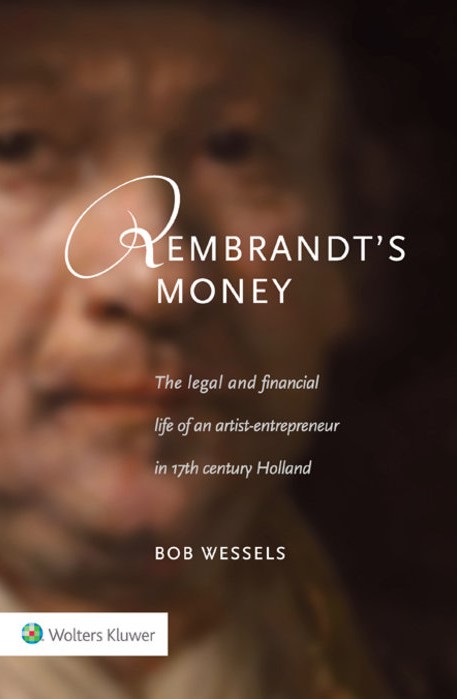
How was Rembrandt involved in a company in the 17th century?

A post by guest blogger Professor Bob Wessels (University of Leiden) on Rembrandt’s Money. The legal and financial life of an artist-entrepreneur in 17th century Holland

One of the most appealing Dutch artists in the 17th century is Rembrandt (1606-1669). Many will have seen his paintings, prints and drawings with a wide range of styles and subjects, from the young inspired artist from Leiden (sketching ‘tronies’ in the 1620s) to his masterpieces, like The Anatomy Lesson of Dr Nicolaas Tulp (1632) and the Night Watch (1642) to the Syndics of the Drapers Guild (‘De Staalmeesters’) (1662) and The Jewish Bride (‘Het Joodse bruidje’) and selfportraits in the second half of the 1660s.

Rembrandt was not an easy man. Strikingly, he was engaged (in several legal capacities) in legal conflicts or battles of all kinds with opponents of several sorts: (foreign) patrons (delivery on time; quality of work; sharp business practices/fees), neighbours (regarding costs of reconstruction of the house/studio/workshop at the Breestraat in Amsterdam ), personnel (in his house), lenders (‘panic’ loans in 1653) and other creditors (e.g. related to not paying rent for an auction room and rent arrears for his last house where he lived in during the last ten years of his life at the Rozengracht in Amsterdam). In all, there is an abundance of legal and financial questions, and my recent book ‘Rembrandt’s Money. The legal and financial life of an artist-entrepreneur in 17th century Holland’ offers a comprehensive overview of all these aspects of the life and work of Rembrandt. These aspects concern his private life as well as his work as an artist, from a young master in Leiden in the mid-1620s, to a celebrated entrepreneur in the third and fourth decades of 17th century Amsterdam, culminating in financial distress (cessio bonorum; ‘cessie van goede’) in the latter part of his life.

Rather fascinating I found the fact that just after his cession bonorum, in 1660, with retroactive effect to 1658, Rembrandt’s life companion at that time, Hendrickje, and Titus (his son from his marriage with Saskia, who had died in 1642) established and commenced an art dealing business (a ‘compagnie’).

Continue reading “How was Rembrandt involved in a company in the 17th century?”

Private enforcement strikes again: liability of subsidiaries and sister companies

Guest blogger Michiel Verhulst (KU Leuven) on the Sumal-case

Subsidiary companies, and presumably sister companies as well, can be held liable to pay damages for the EU competition law infringements committed by their parent companies. In its judgement of 6 October 2021, the Grand Chamber of the European Court of Justice shed light on the EU autonomous concept of ‘undertaking’. The undertaking as a whole, meeting the characteristics of an economic unit, is to be considered personally liable for the actions of its different components. This automatically entails the joint and several liability among the legal and/or other entities that make up the economic unit at the time of the infringement.

More than two and a half years have passed since a previous blogpost explained how the judgement of the European Court of Justice of 14 March 2019 applied the autonomous EU concept of ‘undertaking’ to the private enforcement of EU competition law. As a result of this judgement, both the principles of parental liability and economic continuity became applicable when claiming damages for an infringement of the EU competition rules. The economic reality thus caught up with the legal matrix.

Continue reading “Private enforcement strikes again: liability of subsidiaries and sister companies”

IEAF Call for Papers: The Emerging New Landscape of European Restructuring and Insolvency

2-3 March 2022 in Dublin (Ireland)

The INSOL Europe Academic Forum (IEAF) is inviting submission for its 17th annual conference, taking place from 2-3 March 2022 in Dublin (Ireland). Expressions of interest are invited for the delivery of research papers within the overall academic conference’s theme: “The Emerging New Landscape of European Restructuring and Insolvency

The theme is intended to focus on, inter alia, the following overall topics:

Continue reading “IEAF Call for Papers: The Emerging New Landscape of European Restructuring and Insolvency”

Beginselen van Organisatierecht (ed. 2021)

De herwerkte versie van Beginselen van Organisatierecht (313 blz) kan hier in pdf-vorm worden geconsulteerd:

We maakten deze syllabus voor het vak ‘Bepalingen gemeen aan alle rechtspersonen’ in de Master vennootschapsrecht (KU Leuven).

Continue reading “Beginselen van Organisatierecht (ed. 2021)”

Policy & Practice for Purposeful Business (British Academy)

De British Academy publiceerde deze week het laatste rapport in het kader van de onderzoekslijn “the Future of the Corporation“. Het rapport stelt het doel (“the purpose“) van ondernemingen centraal. Eenieder die de internationale lectuur volgt, weet dat dit onderwerp centraal staat in de actuele debatten (zie bv, H. Fleischer, Corporate Purpose: A Management Concept and its Implications for Company Law, ECFR 2021, afl. 2). Het debat over het doel (de doelen) van vennootschappen zal ongetwijfeld verdergezet worden in de Belgische rechtsleer (in het licht van art. 1.1. WVV). Het rapport van de British Academy kan hier worden geraadpleegd.

Duurzame waardecreatie: de Commissie Corporate Governance licht toe

De Belgische Corporate Governance Code 2020 stelt het concept duurzame waardecreatie centraal. Dit concept behelst een expliciete nadruk op de lange termijn, op verantwoord gedrag van alle geledingen van de vennootschap en een permanente aandacht voor de legitieme belangen van de stakeholders.

Nadere toelichting bij dit concept kan gevonden worden in de recent gepubliceerde toelichtende nota inzake het begrip duurzame waardecreatie. Deze nota is opgebouwd rond zes elementen:

  1. Prioriteit geven aan de lange termijn
  2. De maatschappelijke doelen passend omschrijven
  3. Duurzaamheid integreren in de strategie van de onderneming
  4. Duurzaamheid integreren in de activiteiten van de onderneming
  5. Gestructureerd en gecontroleerd rapporteren over ESG-aangelegenheden
  6. Gestructureerd engagement van de Raad

Thomas Leysen, voorzitter van de Commissie Corporate Governance, onderstreept het belang van duurzame waardecreatie als volgt:

De uitdagingen van duurzame ontwikkeling gaan ons allemaal aan. Geen enkele onderneming kan zich eraan onttrekken. De beursgenoteerde ondernemingen moeten een voorbeeldrol spelen. Ik moedig alle ondernemingen die zich nog niet hebben vastgebeten in duurzaamheid aan om dat voortaan te doen. Ik ben er rotsvast van overtuigd dat de kwaliteit van de strategische denkoefening rond duurzaamheid een beslissende factor zal zijn van hun succes op de lange termijn.