Whose interests are served by the corporate interest?

New shots fired in the ‘shareholders’ vs ‘stakeholders’ war

An international group of corporate law professors has issued a “Modern Corporation Statement on Company Law“, a peculiar two page document which describes itself as a “summary of certain fundamentals of corporate law, applicable in almost all jurisdictions, in an effort to help prevent analytical errors which can have severe and damaging effects on corporations and corporate governance.”

Their 10th and last statement is: Continue reading “Whose interests are served by the corporate interest?”

What do Colonialism and Pizza Delivery Policies Have to Do with the Wells Fargo Scandal?

Jennifer Hill (Sidney Law School) on Oxford Business Law Blog

“Any economist will tell you that incentives matter in understanding human behaviour. The positive incentives provided to the Dutch managers confirm this – they helped to put the Netherlands ahead of the rest of the colonialist pack during the 17th century. But organizational incentives are not always positive. Fast forward three centuries and the story of Domino’s Pizza Inc provides a good example of how organizations can create perverse incentives.”

See post here.

Blog Amicorum – Professor Michel Flamée (VUB)

Bijdragen uit Liber Amicorum van Prof. Dr. M. Flamée online beschikbaar

Zie het overzicht van de bijdragen hier. Zie voor een biografie van Professor Flamée hier. Interesseerden ons onder meer: Continue reading “Blog Amicorum – Professor Michel Flamée (VUB)”

‘You can’t dance at two weddings with one behind’ (Yiddish proverb)

The uneasy dual role of creditor and shareholder

1.

A previous post mentioned the rudimentary rule on distributions in the ‘partnership en commandite’ (limited liability partnership) in article 206 of the Belgian Company Code (‘BCC’), dating back to 1873:

“Third parties can force [the limited partner] to return any interest or dividends distributed to him, if such distributions are not taken from the non-fictitious profits of the partnership. The unlimited partner has recourse against the manager for any distributions he had to return, in case of fraud, bad faith or serious negligence by the manager.”

Today we discuss how one word in this antique (yet inspiring) rule foreshadows a topical subject: Continue reading “‘You can’t dance at two weddings with one behind’ (Yiddish proverb)”

Corporate law after Brexit

Michael Schillig on Oxford Business Law Blog

“The safest option for UK incorporated companies that have their central administration in real seat countries is to convert into a company form of another Member State prior to Brexit taking effect”

See post here.

Distributions to shareholders: inspiration from the ‘partnership en commandite’?

In case of an irregular distribution a shareholder – even in good faith – is less deserving of protection than a creditor

A previous post had a look at the ancient partnership en commandite as a treasure-trove for company law reform. This post explores what we can learn from the ‘partnership en commandite’ for the regulation of  distributions to shareholders. Continue reading “Distributions to shareholders: inspiration from the ‘partnership en commandite’?”

Recht.nl biedt interessant overzicht van Nederlandse proefschriften en oraties

Recht.nl geeft een niet te missen overzicht van Nederlandse proefschriften en oraties in ‘open access’. Interesseerden ons onder meer: Continue reading “Recht.nl biedt interessant overzicht van Nederlandse proefschriften en oraties”

De stichting: het ideale middel om goederen te ‘beschermen’ tegen schuldeisers?

Hoge Raad brengt in herinnering hoe een stichting gebruikt kan worden om schuldeisers te benadelen.  

Een stichting laat toe om een goed in een afgescheiden vermogen onder te brengen. Dat impliceert dat de schuldeisers van de begunstigden van de stichting de stichtingsgoederen niet kunnen uitwinnen. Evenmin hebben ze makkelijke opties om het stichtingsvermogen open te breken door een ontbindingsvordering. Continue reading “De stichting: het ideale middel om goederen te ‘beschermen’ tegen schuldeisers?”

The Economist on Hart & Holmström

Link here. See previous post here.


Our own private Delaware: the ‘partnership en commandite’

Lessons from an ancient experiment with light vehicles: on moral hazard, agency problems, publicity systems and the unsavoury regions of Flanders

The limited partnership or “partnership en commandite” (commenda, société en commandite, Kommanditgesellschaft) has been a fixture of continental business law since the 12th century. It is an entity with one or more unlimited partners and one or more limited partners. For a long time, the limited partnership was the only form offering limited liability off-the-shelf, without the need for a specific governmental authorization. In many jurisdictions the “partnership en commandite” still enjoys a quiet popularity. Continue reading “Our own private Delaware: the ‘partnership en commandite’”

De promotor van een vennootschap in oprichting: een trustachtige figuur?

Cassatie: beslag door persoonlijke schuldeiser van de promotor vervalt bij overname van het beslagen goed door de opgerichte vennootschap

Een vennootschap met rechtspersoonlijkheid die nog niet is opgericht, kan toch vertegenwoordigd worden door een promotor. De verbintenissen én de rechten volgend uit deze rechtshandelingen zijn passiva en activa van de promotor tot en indien de vennootschap overneemt. Indien binnen de wettelijke termijnen de vennootschap rechtspersoonlijkheid verwerft en die verbintenis overneemt wordt, in de woorden van art. 60 W.Venn., “de verbintenis geacht van het begin af door de vennootschap te zijn aangegaan”.

Art. 60 W.Venn. spreekt enkel over de passiefzijde (“de verbintenissen”). De overname met retroactief effect (“van het begin af”) geldt echter ook voor de actiefzijde van de handelingen die door de promotor q.q. werden gesteld, bv. een goed namens de vennootschap in oprichting gekocht.

Wat nu als ná de aankoop maar vóór de overname een persoonlijke schuldeiser van de promotor beslag legt op dit goed? Continue reading “De promotor van een vennootschap in oprichting: een trustachtige figuur?”

Er is meer dan één derde: niet elke vennootschapsschuldeiser kan zich beroepen op niet-openbaarmaking

Cassatie: voormalige firmant waarvan uittreding niet werd gepubliceerd, is niet aansprakelijk voor niet-betaalde bedrijfsvoorheffing die na uittreding verschuldigd werd

Rechtspersoonlijkheid heeft belangrijke gevolgen voor derden, zoals beperkte aansprakelijkheid en vermogenafscheiding. Het is dan ook belangrijk dat die derden op de hoogte worden gesteld. Openbaarmaking gaat daarom naar het hart van de rechtspersoon.

Art. 76 al. 1 W.Venn. bepaalt dat akten en gegevens waarvan de openbaarmaking is voorgeschreven aan derden niet kunnen worden tegengeworpen dan vanaf de dag dat zij werden bekend gemaakt, tenzij de vennootschap aantoont dat de derde daar kennis van droeg.

Wie is die derde die zich op de niet-openbaarmaking kan beroepen? Continue reading “Er is meer dan één derde: niet elke vennootschapsschuldeiser kan zich beroepen op niet-openbaarmaking”

2016 Nobel Prize in Economic Sciences to Hart and Holmström for their contributions to Law & Economics

See statement by the Royal Swedish Academy of Sciences.

“Contract theory has greatly influenced many fields, ranging from corporate governance to constitutional law. Thanks to the work of Oliver Hart and Bengt Holmström, we now have the tools to analyse not only contracts’ financial terms, but also the contractual allocation of control rights, property rights, and decision rights between parties. The contributions by the laureates have helped us understand many of the contracts we observe in real life. They have also given us new ways of thinking about how contracts should be designed, both in private markets and in the realm of public policy.”

See also video of announcement.

Moeder Overste en het Ménage à Trois

Rede plechtige openingsconferentie Balie te Leuven (7 okt. 2016)

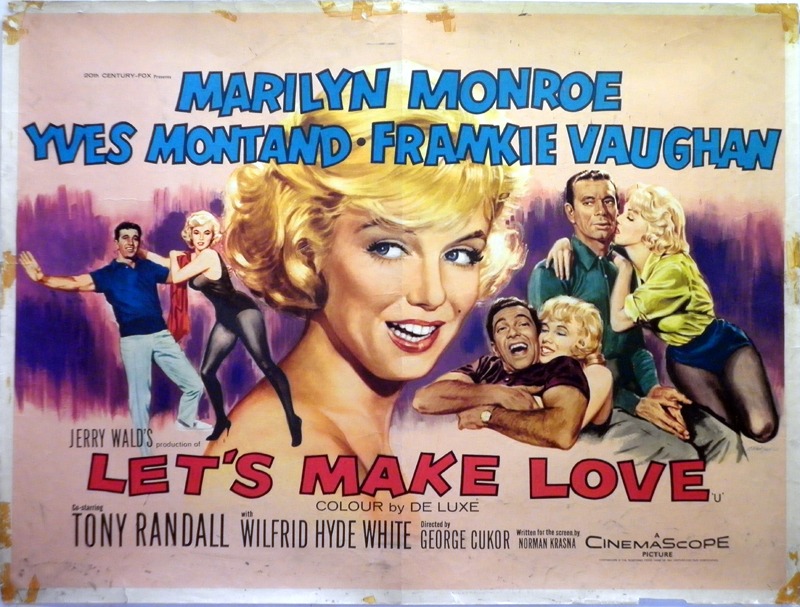
“Let’s make love”, een filmkomedie uit 1960 met Marilyn Monroe en Yves Montand, werd in België op de markt gebracht onder de titel “De Miljardair”. Aan het begin van deze film wordt de rijkdom van het hoofdpersonage als volgt verklaard:

“he was the kind of man who could form a syndicate in an empty room.”

Een syndicaat in een lege kamer. Het illustreert hoe bijzonder het is om de vennootschap, een samenwerkingsvorm, te gebruiken met maar één vennoot.

Traditioneel is het vennootschapsrecht polygaam: Continue reading “Moeder Overste en het Ménage à Trois”

“Limited Liability: A Legal and Economic Analysis” by Stephen Bainbridge (UCLA) and Todd Henderson (University of Chicago)

Read first chapter here.

“Despite its obvious benefits in encouraging socially productive risk taking, limited liability has social costs as well. In particular, it allows corporations to externalize a certain amount of costs and risks onto third parties.”