Een post door gastbloggers
Prof. Em. L. Cornelis en Prof. R. Feltkamp (VUB)
Boek 1 Nieuw Burgerlijk Wetboek (algemeen deel): zoektocht naar oplossingen voor een privaatrecht op maat van de hedendaagse maatschappelijke uitdagingen(pilot – afl. 1: Van geen kwaad bewust?)
1. De beste stuurlui staan aan wal. In een recente opinie in de Tijd (gevolgd door een artikel in de Juristenkrant[1]) hebben de auteurs van deze bijdrage de boute stelling verdedigd dat er geen duurzame toekomst voorligt met verouderde juridische recepten. Deze recepten betreffen het op 24 februari 2021 in de Kamer[2] ingediende wetsvoorstel houdende Boek 1 “Algemene bepalingen” van het Burgerlijk Wetboek (“BW”) (hierna “Boek I”). [3] Het risico met zo een stelling is het deksel op de neus te krijgen.
De plaats ontbrak in de opinie om over te gaan tot een uitgebreidere onderbouwing. Wie op ’t water is moet echter varen. Met deze bijdrage komen wij dan ook graag met onze verdere analyse van wal.
1. Eerder had ik (hier) gewezen op enkele foutjes in artikel XX.106 WER dat luidt:
Het vonnis van faillietverklaring wordt op verzoek van de curatoren aan de gefailleerde betekend.. Het exploot van betekening bevat op straffe van nietigheid, benevens de tekst van de artikelen XX.107 en XX.108, aanmaning om kennis te nemen van de processen-verbaal van verificatie van de schuldvorderingen. Het exploot van betekening bevat eveneens de tekst van de artikelen XX.145 en XX.165.
De aldaar opgenomen artikelen XX.107, XX.108, XX.145 en XX.165 WER zijn foutief.
In het eerdere blogbericht legde ik uit dat de artikelen XX.107 en XX.108 moesten “gelezen” worden als XX.108 en XX.109. Verder motiveerde ik dat art. XX.145 diende te worden vervangen door art. XX.146. Over de correcte “vervanging “ van artikel XX.165 WER bestond minder duidelijkheid. Dit kon zowel artikel XX.166 dan wel XX.167 zijn.
2. Volksvertegenwoordiger Florence Reuter heeft over voormelde vaststelling een parlementaire vraag gesteld aan de Minister van Justitie. (Vr. en Antw. Kamer 2020-2021, 18 februari 2021, nr. 55/039, 185, Vr. nr. 292 F. REUTER).
Over de foutieve artikelen XX.107, XX.108 en XX.145 vraagt de volksvertegenwoordiger “ Betreft het een vergetelheid en moeten de vermeldingen in de artikelen XX.109 et XX. 148 toch in de exploten opgenomen worden (en zal die fout dus rechtgezet worden)? ”
Met betrekking tot art. XX.165 (zijnde een extra vermelding in vergelijking met het vroegere artikel 13 Fail.W.) wordt aan de minister gevraagd : “Kunt u daarnaast bevestigen dat de wetgever wel degelijk de intentie had om nieuwe vermeldingen aan de exploten toe te voegen ?”
A post by guest bloggers Eric Blomme and Cécile Odeurs (Simmons & Simmons)
The COVID-19 pandemic has put the rescue of struggling but viable businesses front of the agenda. The initial response of the Belgian government and legislator was a moratorium on enforcement measures and bankruptcy petitions. Such moratorium can however not be a structural solution in the long term, and expired on 31 January 2021.
The attention then shifted to the improvement of the existing legal framework. Fortunately, Belgium already benefits from a pre-bankruptcy moratorium procedure designed to rescue struggling businesses (the “judicial reorganisation”). Although this procedure is well designed, it does suffer one key drawback: its public nature. In light of cultural and other factors, the opening of such public procedure often leads to a loss of confidence from suppliers and customers and triggers further loss of value.
In this context, on 11 March 2021, the Belgian Chamber of Representatives approved a law modifying the Belgian insolvency code (the “Pre-Pack Law“). The Pre-Pack Law will shortly be published in the Belgian State Gazette and enter into effect. The Pre-Pack Law will introduce, among other measures, a non-public pre-pack reorganisation. The key features of this pre-pack reorganisation are as follows:
A post by guest bloggers Ivan Peeters, Charles-Henri Bernard and Leopoldo Luyten de Alvear
1. Investment firms play a key role in modern financial markets and in advising professional and retail clients. In particular they assist in matching investors and funds to be invested with investment opportunities and funding needs. The current market situation combines a structural low interest rate environment on the one hand and an expected surge of projects that need funding or equity. Such surge will not in the least be driven by ESG (environmental sustainability targets in particular) and by the efforts to re-open the economies in Western Europe.
2. In December 2019, the EU Parliament approved the new prudential framework for investment firms in the Investment Firm Directive (“IFD”) [1] and Investment Firm Regulation (“IFR”)[2] to be implemented in the European Union (“EU”) by 26 June 2021. This represents a significant reform in the EU regulatory framework and will have a material impact on most investment firms. In the Belgian regulatory landscape, investment firms are either stockbroking firms (sociétés de bourse / beursvennootschappen) or portfolio management companies(société de gestion de portefeuille et deconseil en investissement / vennootschappen voor vermogensbeheer en beleggingsadvies).Continue reading “The new prudential framework for investment firms – More fit for purpose?”
A post by guest blogger Arnaud Van Caenegem (KU Leuven)
Financial services providers can no longer communicate at will about sustainability now certain provisions of the Sustainable Finance Disclosure Regulation (SFDR)[1] have become applicable as of 10 March 2021. The SFDR imposes harmonized disclosure obligations on financial services providers to ensure that the sustainability features of their financial products can be better compared by investors. Up until now, sustainability disclosures have often been limited to vague, unsubstantiated and sometimes misleading marketing rhetoric.[2] This blogpost will discuss the transparency obligations of the SFDR that become applicable on 10 March 2021. Continue reading “Green disclosure rules for the financial services sector become applicable in the EU”
A post by guest bloggers Ivan Peeters, Philip Van Steenwinkel and Frederik Stappers
1. Over the past few years crypto-assets have garnered significant attention from the media, financial analysts, governments, regulatory institutions and investors. However, this year interest in crypto-assets has skyrocketed. With big investments of corporates, investment funds and millions already being raised by Initial Coin Offerings, it shows that crypto-assets are maturing and here to stay. In this post we provide some considerations in relation to the legal and regulatory characterisation and regulatory treatment of token offerings and the most common crypto-assets. Continue reading “Crypto-assets: regulators and regulations trying to catch up with innovation without stifling it?”
Een aantal recente fundamentele wijzigingen in het ondernemingsrecht beogen flexibilisering maar brengen tegelijk de bescherming van de schuldeiser mogelijk in het gedrang. De vraag stelt zich in welke mate de vennootschapsschuldeiser nog bescherming vindt onder het WVV, en welke instrumenten ter beschikking zijn van de schuldeiser.
In een webinar van KMO Campus op 18 maart 2021 onderzoeken professor Joeri Vananroye en dr. GillisLindemans, beide advocaat bij Quinz, de mogelijkheden en uitdagingen voor schuldeisers onder het WVV.
De docenten bespreken de algemene principes en passen dit toe op uitkeringen, de vereffening en verrichtingen binnen een vennootschapsgroep en met andere insiders.
Onder meer komen de volgense onderwerpen aan bod:
Vennootschapsbelang, wettelijke specialiteit en pauliana als instrument van schuldeisersbescherming
Toepassing: Openlijke en verkapte uitkeringen
Toepassing: Vereffening
Toepassing: Intragroepsverrichtingen en andere verrichtingen met insiders
A post by guest bloggers Ivan Peeters and Charles-Henri Bernard
1. Investment funds play a key role in modern financial markets to give investors access to investments with the benefit of different layers of structural and regulatory protections. A large and efficient market for investment funds also serves to help sponsors of projects to get access to the large amounts of value that today’s investors seek to invest. This will in particular also apply for the exponentially growing need to invest in sustainable, forward looking projects.
2. Against this background, the European legislation has created a financial regulation framework for (a) the authorisation and supervision of alternative investment fund managers (AIFMs), (b) the oversight of AIFMs’ activities and services, in their home country as well as in other EU jurisdictions, and (c) the marketing of alternative investment funds (AIFs) (i.e. the distribution of securities issued by AIFs). AIFs are investment funds that are not regulated at EU level by the long established UCITS Directive[1], meaning they are not regulated at “product level” (structure, securities …). Only their management is regulated. AIFs include hedge funds, private equity funds, real estate funds, investment trusts, infrastructure funds and a wide range of other types of investment funds.
Het internationaal privaatrecht is het onderschatte sluitstuk van schuldeisersbescherming. Het zijn immers de IPR-regels die bepalen of schuldenaars dwingende regels kunnen “wegbedingen”, ten nadele van hun schuldeisers, door keuze voor een rechtstelsel dat die regel niet kent. Zo laat ons land sinds kort de insiders van de vennootschap volledig vrije keuze van het toepasselijke vennootschapsrecht. In welke mate beperken andere rechtsdomeinen, zoals het insolventierecht, de rechtskeuze ter bescherming van de schuldeisers?
Dhr. Michiel Poesen (KU Leuven) besprak deze thema’s op 15 oktober 2020. U kan zijn presentatie hier (her)bekijken.
Meer info vindt u ook in het boek van dr. Gillis Lindemans over Schuldeiser en Rechtspersoon.
A post by guest bloggers Ivan Peeters and Charles-Henri Bernard
1. Under the Belgian regulation on residential mortgage credit (the “ML Regulation”)[1], any individual or legal entity willing to own and hold receivables arising from residential mortgage loans, either by originating such loans or by purchasing mortgage loan receivables, must be authorised as a mortgage lender (“kredietgever inzake hypothecair krediet” / “prêteurs en crédit hypothécaire”). This authorisation shall be requested to, and granted by, the Belgian Financial Services and Markets Authority (the “FSMA”).
2. However, certain derogations from the normal authorisation conditions are available for two special categories of entities:
a) entities that only manage and recover mortgage loans; and
b) certain special types of purchasers of mortgage credit receivables, in particular securitisation vehicles and mobilisation institutions more generally.
These derogations were introduced in the ML Regulation in 2017, when existing mortgage credit lenders and existing mobilisation institutions were required to seek an updated licence (the “2017 Update”).
Uitkeringen zijn in zekere zin intrinsiek controversieel: ze laten toe dat aandeelhouders, die nochtans achtergesteld heten te zijn, toch al een vermogensvoordeel ontvangen zonder dat alle schulden van de vennootschap moeten zijn betaald.
Prof. Dr. Robbie Tas (KU Leuven, Intui) besprak op 15 oktober 2020 de grenzen aan uitkeringen in het WVV en hun verhouding met de remedies uit het insolventierecht, zoals de pauliana. U kan zijn presentatie hier (her)bekijken.
Meer info vindt u ook in het boek van dr. Gillis Lindemans over Schuldeiser en Rechtspersoon.
Het aansprakelijkheidsrisico voor bestuurders wordt des te nijpender in de schemerzone voor insolventie. De kans neemt dan immers aanzienlijk toe dat schuldeisers (of een faillissementscurator namens hen) de bestuurders persoonlijk verantwoordelijk zullen stellen voor het ontstane tekort. In hoeverre moeten bestuurders werkelijk aansprakelijkheid vrezen voor bv. wrongful trading, onrechtmatige selectieve betaling of kennelijk grove fout?
Deze actuele kwesties werden besproken door Prof. Dr. Marieke Wyckaert op de studiedag aan de KU Leuven op 15 oktober over Schuldeisers en Rechtspersonen. U kan haar presentatie hier bekijken (30 min.).
Meer info over de band tussen het vennootschapsbelang, het schuldeisersbelang en andere normen vindt u in het boek van dr. Gillis Lindemans over Schuldeiser en Rechtspersoon
Een post door gastbloggers Ivan Peeters en Sean Jonckheere
Collateral Richtlijn
1. De invoering van de Richtlijn 2002/47/EG (de “Collateral Richtlijn”)[1] beoogde een communautaire, geharmoniseerde regeling te bewerkstelligen ter versterking van de positie van de gewaarborgde schuldeiser van een financiële zekerheidsovereenkomst en om systeemrisico’s in de financiële markten beter te kunnen beheersen. De omzetting van de Collateral Richtlijn naar Belgisch recht vond plaats in 2004 middels de befaamde Wet financiële zekerheden[2] (“WFZ”).
2. De Collateral Richtlijn voorziet in een gunstregime voor de financiële zekerheidsovereenkomsten die onder haar toepassingsgebied vallen. EU-lidstaten zijn onder meer verplicht om bepaalde formaliteiten inzake de totstandkoming, derdenwerking en uitvoering van financiële zekerheidsovereenkomsten te versoepelen en bepalingen inzake insolventierecht van hun nationaal recht niet toepasselijk te verklaren om de afdwinging van financiële zekerheidsovereenkomsten te bevorderen.
Verschaffingscriterium
3. Een essentiële voorwaarde om als financiële zekerheidsovereenkomsten onder het toepassingsgebied van de Collateral Richtlijn te vallen, is dat de financiële activa (contanten, of financiële instrumenten) die als zekerheid moeten dienst doen worden “verschaft”. Recital (10) bepaalt dat de Collateral Richtlijn enkel handelt over “financiëlezekerheidsovereenkomsten die voorzien in een vorm van het doen van afstand van de controle, d.w.z. de verschaffing als zekerheid van financiële activa, en waarbij de verschaffing als zekerheid van financiële activa schriftelijk of door middel van een duurzaam medium kan worden aangetoond, waardoor de traceerbaarheid van die activa wordt gewaarborgd”. Bijkomend stelt artikel 2 van de Collateral Richtlijn: “Verwijzingen in deze richtlijn naar het „verschaffen” of de „verschaffing” als zekerheid van financiële activa hebben betrekking op een situatie waarin de als zekerheid verschafte financiële activa daadwerkelijk worden geleverd, overgedragen, gehouden, ingeschreven in een register of anderzijds gekwalificeerd, zodat zij in het bezit of onder de controle komen van de zekerheidsnemer of een persoon die namens de zekerheidsnemer optreedt”. Voor alle duidelijkheid, naar nationaal recht kan een zekerheid geldig zijn zonder deze verschaffing, maar deze zal dan niet kunnen genieten van het gunstregime van de Collateral Richtlijn.
A post by guest blogger Prof. Lisa Siraganian (Johns Hopkins University)
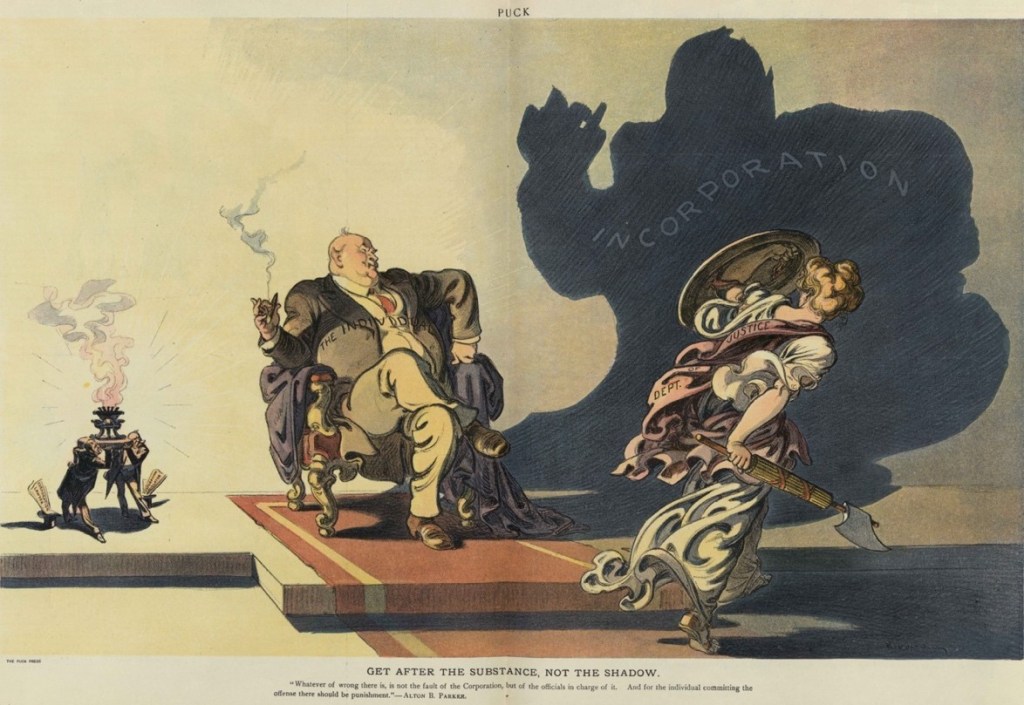
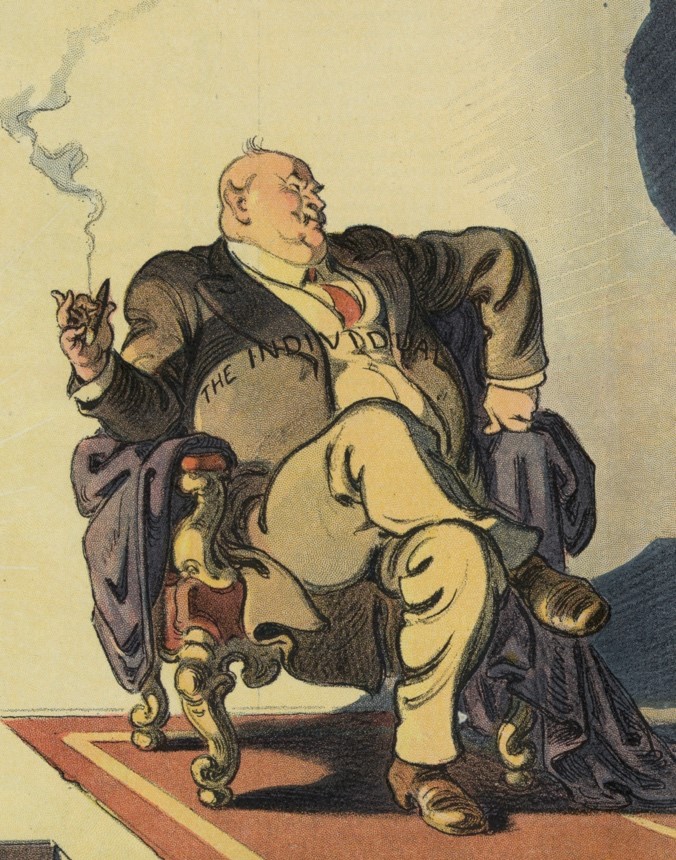
Scholars of corporate legal finance tend not to spend a lot of time worrying about how the corporation relates to novels, poems, literary movements. Or to political cartoons, like Udo Keppler’s fascinating 1910 magazine illustration of the shadowy corporation (more on that one below). But maybe they should. That’s what I argue in my new book, Modernism and the Meaning of Corporate Persons, out just now as part of the Law and Literature series from Oxford University Press, edited by Professors Robert Spoo and Simon Stern.
The story begins with the fateful US Supreme Court decision, Santa Clara v. Southern Pacific Railroad, which legitimatized the American legal fiction of corporate personhood in 1886. After that decision, the development of the idea that law could endow a nonhuman entity with certain rights expanded into American culture. And, not surprisingly, the notion that an eerie, insubstantial corporation could be considered similar to persons bothered many actual people throughout the first decades of the twentieth century.
In the book, I explore how and why the possibility that large collective organizations might mean to do what they do—and might mean like us, like persons—both excited and worried American creative writers, artists like Keppler, and theorists of the corporation. In roughly the first half of the twentieth century, these ideas stimulated new thoughts about what it means to act as a person or as a group. It also sparked new thoughts on what it means to intend to act at all. Of course, versions of that conversation continue today, most often as debates on blogs, scholarship, and in heated media discussions, whether on legal personhood, corporate social responsibility, veil-piercing, or corporate criminal liability. But the earlier deliberations on similar issues have remained, until now, an untapped resource to understand corporate action, worked out in entirely different forms.
For example, consider the law reviews and treatises on contracts and agency law by US Supreme Court Justice Oliver Wendell Holmes, Jr. and law professor Ernst Freund. Or, alternatively, take the inventive modernist poems of Gertrude Stein and the novels of F. Scott Fitzgerald, author of The Great Gatsby and The Love of the Last Tycoon. Whichever you choose, you can find each writer trying to work out the following problem. Namely, if you can’t be sure how to represent or describe a corporate entity, or who exactly intended what a corporation said or acted, then how can you really know what that corporation meant when it “said” something or acted in a certain way? But knowing, or not knowing, mattered. It would determine what you might fairly expect from the various human persons when they work for a corporation. And it would impact how society should treat (or regulate) these corporate entities and what they did in the world. Continue reading “Do corporate acts always count as some person’s actions?”
Presentatie door Professor Sofie Cools (KU Leuven)
Krijgt het vennootschapsbelang een andere invulling in de aanloop naar insolventie? En in welke remedies krijgt dit vennootschapbelang concreet gestalte?
Deze actuele vraag werd besproken door Prof. Dr. Sofie Cools op de studiedag aan de KU Leuven op 15 oktober over Schuldeisers en Rechtspersonen. U kan haar presentatie hier (her)bekijken.
Meer info over de band tussen het vennootschapsbelang, het schuldeisersbelang en andere normen vindt u in het boek van dr. Gillis Lindemans over Schuldeiser en Rechtspersoon


 Corporate Finance Lab