Valuation in Dutch Corporate Law and Bankruptcy Law

A post by guest blogger Sebastiaan van den Berg

On 31 January 2019, Sebastiaan van den Berg successfully defended his PhD thesis at the Radboud University in Nijmegen (the Netherlands). Under supervision of prof. mr. S.C.J.J. Kortmann and prof. dr. W.G.M. Holterman, Sebastiaan studied aspects of business valuation in (i) corporate law proceedings and (ii) financial restructurings or reorganizations of companies. Having a background in both law and economics, his book Valuation in Dutch Corporate Law and Dutch Bankruptcy Law”, is based on interdisciplinary research. With this research and its conceptual approach to valuation (instead of a mere technical overview of valuation methodologies), the book offers a useful guide on the key valuation concepts and principles that are relevant in legal settings. Continue reading “Valuation in Dutch Corporate Law and Bankruptcy Law”

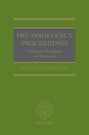
Pre-Insolvency Proceedings, A Normative Foundation and Framework

9780198799924 (1)

Oxford University Press recently published a book on pre-insolvency proceedings (aptly entitled) “Pre-Insolvency Proceedings, A Normative Foundation and Framework”. It is authored by Nicolaes Tollenaar and includes a foreword from Justice Richard Snowden.

The book develops a normative foundation for pre-insolvency proceedings and provides a framework outlining what an ideal pre-insolvency procedure might look like. It discusses the key economic and legal principles underlying restructuring proceedings, the system of voting in classes, the appropriate criteria for cram down and valuation. It further offers a comparative analysis of UK schemes and the Chapter 11 plan procedure with a view to drawing on the lessons learned from each.

The book is an updated translation of the (Dutch) PhD of the author (previously presented on this blog) and is available at:  https://global.oup.com/academic/product/pre-insolvency-proceedings-9780198799924?cc=nl&lang=en&

Frederik De Leo about Plessers-case on ‘Oxford Business Law Blog’

The day after the ECJ’s AG Szpunar delivered his opinion in the case Plessers, a first analysis by Frederik De Leo was published on the Corporate Finance Lab (see here). Other versions of this blog post have now appeared on the Oxford Business Law Blog (in English) and in ‘De Juristenkrant’ (in Dutch).

In these other versions, the author discusses the possible consequences of the ECJ following its AG’s opinion from a comparative perspective. In this context, the author observes the following: Continue reading “Frederik De Leo about Plessers-case on ‘Oxford Business Law Blog’”

Where (Law and) Economics Went Wrong

Reflections of a lawyer upon David Colander and Craig Freedman, Where Economics Went Wrong. Chicago’s Abandonment of Classical Liberalism, Princeton University Press, 2019, xii + 267 p.

In Where Economics Went Wrong. Chicago’s Abandonment of Classical Liberalism David Colander and Craig Freedman argue that economics went wrong when economic policy recommendations were presented as applied science. Policy, according to the authors,

“needs to be drawn from a complicated blend of judgments about ambiguous empirical evidence, normative judgements and sensibilities that may be framed, but are not determined, by scientific theory. Put another way, economic policy is a blend of engineering and judgment – an “art and craft”, not a scientific endeavor that follows from economic theory.” (p. 1 – with “sensibilities” they refer to essential policy considerations and factors that are not easily measured or quantifiable, see p. 163, note 1)

They do not dispute that there is a scientific branch of economics, but an economist should not make policy recommendations with the aura of an economic scientist. Policy decisions are too messy for a crisp scientific methodology and, while they should be informed and illuminated by economic science, they are not determined by it. The “ought” of policy precepts rarely follows directly from the “is” of economic science. Continue reading “Where (Law and) Economics Went Wrong”

Can directors be employees?

Can directors be employees? An array of answers are possible. A director may accept to perform the duties resulting from company law and the statutes of association by entering into eg a management contract, an agency agreement, or an employment contract. The diversity of plausible answers also impacts on EU private international law, as the applicability of the protective rules on jurisdiction in matters relating to employment contracts, contained in Art 18 et seq of the Brussels I Regulation Recast, depends on whether a relationship can be characterised as a ‘matter relating to an individual contract of employment’. At stake are among other things (1) the option of the director to sue the company in the courts of the place where he is domiciled, and (2) whether the company is restricted to pursue its actions against the director in the courts of the director’s domicile.

In his Opinion in C-603/17 EU:C:2019:65 Bosworth ea v Arcadia Petroleum ea, AG Saugmandsgaard Øe clarified the position of directors of a company in respect of the rules of jurisdiction applicable to employment contracts.

Continue reading “Can directors be employees?”

Heremans Lectures in Law & Economics 2019: “The China Puzzle: A framework in understanding Chinese law”

Prof. Dr. Ruoying Chen
(UNSW Business School and Peking University Law School) – KU Leuven – 20 February 2019 at 9 a.m.

Dieter Heremans Lecture Series
in Law and Economics 2019

by

Prof. Dr. Ruoying Chen

UNSW Business School
Peking University Law School

The opening lecture will be held in at KU Leuven, auditorium Zeger Van Hee (DV1.91.56),
College De Valk, Tiensestraat 41 in Leuven (Belgium) on Wednesday 20 February 2019 at 9 a.m.

The lecture is free but please register here. Continue reading “Heremans Lectures in Law & Economics 2019: “The China Puzzle: A framework in understanding Chinese law””

Always grab the pen?

Badawi, Adam B. and de Fontenay, Elisabeth, Is There a First-Drafter Advantage in M&A? Badawi, Adam B. and de Fontenay, Elisabeth, Is There a First-Drafter Advantage in M&A? Available at SSRN: https://ssrn.com/abstract=3317622

Does the party that provides the first draft of an agreement get better terms as a result? Transactional lawyers tend to argue that by grabbing the pen they get better outcomes for their clients (who incidentally also incur higher laywers’ fees in the process).

But is it true that holding the pen for the first draft of the agreement can give an advantage in the final deal reached? Continue reading “Always grab the pen?”

Plessers: the ECJ on a Killing Spree in the Belgian Insolvency Landscape?

Setting the Boundaries of Articles 3–5 of Council Directive 2001/23/EC in the Aftermath of Smallsteps

Yesterday, Advocate General (AG) Szpunar delivered his opinion in Plessers (C-509/17), a case before the European Court of Justice (ECJ) that concerns the protection of employees in one of the Belgian insolvency proceedings, i.e. the judicial reorganisation by transfer under judicial supervision/gerechtelijke reorganisatie door overdracht onder gerechtelijk gezag (hereinafter referred to as ‘GROG’). If the ECJ follows the interpretation by AG Szpunar of Articles 3-5 of Council Directive 2001/23/EC (hereinafter the ‘Directive’), the referring court would have almost no other option than to rule that Article 61(3) WCO (now: Article XX.86, §3 WER) violates the Directive.


Background

On 23 April 2012, NV Echo entered into a judicial reorganisation by way of collective agreement. However, a collective agreement could not be reached, and on 19 February 2013, the judicial reorganisation proceeding was transformed into a GROG. On 22 April 2013, NV Prefaco took over the business of NV Echo together with two-thirds of the total employees of the transferor.

Plessers, who was one of the dismissed employees, argued (among other things) that Article 61(3) WCO violates the Directive. Continue reading “Plessers: the ECJ on a Killing Spree in the Belgian Insolvency Landscape?”

Een terugblik op 2018

De posts die in 2018 het meest werden gelezen zijn:

Nog geen megahits, maar voor de meerwaardezoekers: Continue reading “Een terugblik op 2018”

Agreement on a new approach to business insolvency in Europe

Yesterday, a political agreement was reached by the European Parliament and EU Member States on a set of European rules on business insolvency. The text must now be formally adopted by the European Parliament and the Council of the EU. Following final adoption, the Directive will be published in the EU’s Official Journal and enter into force 20 days later. Continue reading “Agreement on a new approach to business insolvency in Europe”

On the reasoning of the ECJ in the PSPP-case

1.745 Germans turned to the Bundesverfassungsgericht claiming that the European Central Bank (ECB) undermined democratic control of the use of state power in Germany. They believed that the new policies of the ECB usurped economic competences that should, according to their constitution and the Treaties, stay in the hands of the national parliament where they can be influenced by the voters. The German court followed the reasoning of the plaintiffs and asked the Court of Justice of the European Union (ECJ) to review the validity of the public sector purchase program (PSPP) that was established by the Governing Council of the ECB. The ECJ recently delivered her ruling in that case. It found that there was no reason to invalidate the program.

The alleged threat to democratic control of government is only mentioned once in the judgement, namely in the description of the claims before the referring court. The ECJ nowhere considers the principle of democratic control of government (in article 2 and 10.1 TEU) for the interpretation of the powers transferred to an independent central bank. The concerns of the Bundesverfassungsgericht remain unaddressed. The ECJ chose other methods of interpretation. This blog will provide a critical review of those choices made by the Court when trying to develop and enforce a standard of review for the compliance with the substantial constraints on monetary policy.

Although those choices of the Court are understandable when viewed separately, they lead to an overall unsatisfactory outcome. They transform substantial constraints into formal constraints, make judicial review of substantial constraints ineffective and undermine the capacity of a treaty to be used as a trust building commitment device. In so far as the participation in the Union, the transfer of powers to the Union and application of EU law in the Member States is conditioned on those substantial constraints by the political or legal constitution of the Member States, the Court, that seems to be unable or unwilling to grant effective protection to those substantial constraints, undermines the full effect, uniform application and further integration.

Continue reading “On the reasoning of the ECJ in the PSPP-case”
Cross-border restructuring and insolvency post-Brexit

The Conference of European Restructuring and Insolvency Law (CERIL) published its report on cross-border restructuring and insolvency post-Brexit today. In its report, CERIL highlights the relationship between the EU and the UK after Brexit in the area of restructuring and insolvency law and seeks to formulate a position on the nature and content of a possible future instrument governing that relationship. The report can be found here.

EU Competition Law as a Taxation Regime

Can tax avoidance be anticompetitive?

Google has been in the news for more than one reason. For one, its tax planning has attracted the attention of the public media, and prompted European officials to charge Google with tax avoidance or even tax evasion. The record fines imposed on Google pursuant to the EU’s competition law have made at least as many headlines; Google has appealed, but more cases are pending. These seemingly unrelated events under different legal regimes may be connected, however. The fines levied against Google under EU competition law can be seen as making Google pay its ‘fair share’ to compensate for exploiting loopholes in tax law. However, if the objective is to make Google pay its ‘fair share’, why couldn’t this objective be achieved under tax law?

Continue reading “EU Competition Law as a Taxation Regime”

Corporate Social Responsibility Debate

On November the 26th of 2018 a debate on the added value of Corporate Social Responsibility (CSR) took place in Leuven. Both prof. dr. Marieke Wyckaert (KU Leuven) and em. prof. dr. Viktor Vanberg (Albert-Ludwigs-Universität Freiburg and Walter Eucken Institut) gave a short lecture and subsequently comment on each other’s point of view. Prof. dr. Joeri Vananroye moderated the debate. You can find the video of this debate below.

Continue reading “Corporate Social Responsibility Debate”

Modernisation of Bankruptcy Procedure Act to enter into force in the Netherlands

A post by guestblogger Jochem Hummelen (NautaDutihl)

On 1 January 2019, the Modernisation of Bankruptcy Procedure Act (MBPA) (in Dutch: Wet Modernisering Faillissementsprocedure) is set to enter into force in the Netherlands. This act, which will apply to bankruptcies opened on or after 1 January 2019, is aimed at updating Dutch bankruptcy law to bring it more in line with modern practice. In this blog post, I give an overview of the background to the MBPA and the most important measures provided for in this law. Continue reading “Modernisation of Bankruptcy Procedure Act to enter into force in the Netherlands”