De Postuniversitaire Cyclus Willy Delva biedt juristen reeds meer dan veertig jaar lang de kans toelichting te krijgen bij en inzicht te verwerven in een brede waaier van rechtsdomeinen. Telkens wordt gekozen voor thema’s met hoge actualiteitswaarde. Continue reading “PUC Willy Delva 2017-18. Het nieuwe ondernemingsrecht”
Author: Arie Van Hoe
Arie Van Hoe, lawyer (Cresco) - corporate law, insolvency law, ESG.
Insolvency proceedings and human rights
In its judgment of 11 January 2018 in the case of Cipolletta v. Italy, the European Court of Human Rights held that there had been a violation of Article 6 § 1 (right to a fair hearing within a reasonable time) of the European Convention on Human Rights and a violation of Article 13 (right to an effective remedy). Continue reading “Insolvency proceedings and human rights”
Insolventierecht in beweging – studieavond UA
Naar jaarlijkste traditie organiseren de studenten van de grondige studie insolventierecht (UA) opnieuw een studieavond, onder begeleiding van prof. Melissa Vanmeenen. Op de tiende (feest)editie van deze studieavond worden de belangrijkste evoluties die het (grensoverschrijdende) insolventierecht het voorbije decennium heeft ondergaan zorgvuldig besproken en in verband gebracht met het nieuwe boek XX WER, dat in 2018 in werking treedt. De blik wordt zowel op het verleden als op de toekomst van het insolventierecht gericht. Continue reading “Insolventierecht in beweging – studieavond UA”
Brexit and EU rules on company law
A Notice to Stakeholders was recently published on the website of the European Commission, DG Justice and Consumers, regarding legal repercussions which need to considered (if and) when the United Kingdom becomes a third country.
As of the withdrawal date, UK incorporated companies will be(come) third country companies and therefore not automatically be recognised under Article 54 TFEU by the Member States. They may, however, be recognised in accordance with each Member State’s national law (private international law rules concerning companies and the subsequently applicable substantive company law), or international law treaties. Continue reading “Brexit and EU rules on company law”
Circulaire betreffende het pandregister
Op 1 januari 2018 treedt de Pandwet (eindelijk) in werking. Een belangrijk onderdeel van deze wet betrof de oprichting van een Nationaal Pandregister, pandregister genoemd, onder het beheer van de Algemene Administratie van de Patrimoniumdocumentatie. De tegenstelbaarheid van het pandrecht wordt afhankelijk van de registratie in het nieuw ontworpen pandregister.
De werking van het pandregister is nader geregeld in het KB van 14 september 2017. Met circulaire 2017/C/76 van 23 november 2017 verschaft de FOD Financiën nuttige toelichting bij de Pandwet en het KB. De circulaire kan hier geraadpleegd worden.
Vis attractiva concursus and its limits
In its judgment of 9 November 2017, the Court of Justice has limited the principle of vis attractiva concursus, i.e. the principle that ancillary proceedings may be attracted to, and brought before, the forum concursus. The Court ruled that article 3(1) of the (old) Insolvency Regulation must be interpreted as meaning that an action for damages for unfair competition by which the assignee of part of the business acquired in the course of insolvency proceedings is accused of misrepresenting itself as being the exclusive distributor of articles manufactured by the debtor does not fall within the jurisdiction of the court which opened the insolvency proceedings. Continue reading “Vis attractiva concursus and its limits”
The principle of limited liability. A reminder on Salomon v A Salomon & Co Ltd
In Salomon v A Salomon & Co Ltd, the House of Lords famously upheld the principle that creditors of an insolvent company cannot sue the company’s shareholders for any of the company’s outstanding debts. In the words of Lord Herschell: Continue reading “The principle of limited liability. A reminder on Salomon v A Salomon & Co Ltd”
Nieuwe aanvraag tot gerechtelijke reorganisatie na intrekking van het reorganisatieplan. Cassatie zet het licht op groen.
Artikel 23, § 5 WCO bepaalt dat wanneer het verzoek tot gerechtelijke reorganisatie uitgaat van een schuldenaar die meer dan drie maar minder dan vijf jaar tevoren reeds het openen van een procedure van gerechtelijke reorganisatie heeft aangevraagd en verkregen, de nieuwe procedure van gerechtelijke reorganisatie niet mag terugkomen op de verworvenheden van de schuldeisers die zijn verkregen tijdens de vorige procedure.
Met deze regel, ingevoerd bij Wet van 27 mei 2013 tot wijziging van verschillende wetgevingen inzake de continuïteit van de ondernemingen, beoogt de wetgever te verzekeren dat een nieuw plan een oud plan niet kan wijzigen (A. Van Hoe, “Continuïteit voor de Wet Continuïteit Ondernemingen”, RW 2013-14, 1210).
Quid indien het oud plan ingetrokken werd op grond van art. 58 WCO, zonder dat het enige uitvoering heeft gekregen? Verhindert zulks dat een nieuwe procedure van gerechtelijke reorganisatie wordt geopend? In een arrest van 12 oktober 2017 (Nr. C.17.007.N) beantwoordt het Hof van Cassatie deze vraag (terecht) negatief: Continue reading “Nieuwe aanvraag tot gerechtelijke reorganisatie na intrekking van het reorganisatieplan. Cassatie zet het licht op groen.”
Instrument of the European Law Institute: Rescue of Business in Insolvency Law
Since the global financial crisis, the topic of business rescue ranks top on the insolvency law related agenda of both the EU and national legislators faced by a rapid growth of insolvencies, which highlighted the importance of efficient mechanisms for dealing with financially distressed, but viable business. For the ELI (European Law Institute), this fueled the momentum to launch an in-depth project on furthering the rescue of such businesses across Europe.
Continue reading “Instrument of the European Law Institute: Rescue of Business in Insolvency Law”
Le droit de l’insolvabilité nouveau est arrivé
De wet van 11 augustus 2017 houdende invoeging van het Boek XX “Insolventie van ondernemingen”, in het Wetboek van economisch recht, en houdende invoeging van de definities eigen aan Boek XX en van de rechtshandhavingsbepalingen eigen aan Boek XX in het Boek I van het Wetboek van economisch recht, werd vandaag gepubliceerd in het BS. Het wetgevende proces, waarvan op deze blog regelmatig verslag werd uitgebracht, is hiermee afgerond. De wet treedt in werking op 1 mei 2018, en zal van toepassing zijn op insolventieprocedures geopend vanaf die dag.
Continue reading “Le droit de l’insolvabilité nouveau est arrivé”
De obligatielening
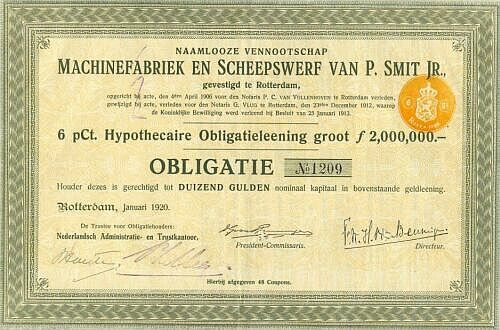
De obligatielening neemt een belangrijke plaats in, in de financiering van (Belgische) ondernemingen. Veertig jaar (en een aantal financiële crisissen) na de publicatie van het standaardwerk van Van Hille, Aandelen en obligaties in het Belgische recht, ligt een nieuw standaardwerk voor, geschreven door een schare auteurs o.l.v. Diederik Bruloot en Kristof Maresceau (UGent). Continue reading “De obligatielening”
Draft Dutch bill on pre-insolvency proceedings
Yesterday, the Dutch government published a new draft bill seeking to introduce pre-insolvency proceedings in the Netherlands (a previous post on pre-insolvency proceedings can be found here). The draft bill can be found here. An unofficial English translation is available at the website of RESOR.
Continue reading “Draft Dutch bill on pre-insolvency proceedings”
Hervorming van het Belgische insolventierecht: update (III)
Op de website van de Kamer kan het verslag van de tweede lezing namens de commissie voor handels-en economisch recht geconsulteerd worden evenals de tekst aangenomen in tweede lezing. De hervorming van het Belgische insolventierecht is hiermee bijna een feit. De stemming in plenaire vergadering zou nog voor het zomerreces plaatsvinden.
The case for special insolvency regimes for small businesses – World Bank Group Report
Micro, small, and medium enterprises (MSMEs) drive employment, economic growth, and entrepreneurship across the globe. In many countries, however, bankruptcy laws are designed with the complexity and sophistication of large companies in mind, not to address issues relevant to micro and small businesses. Complex insolvency systems deter
MSMEs from resorting to formal procedures to tackle financial distress. Continue reading “The case for special insolvency regimes for small businesses – World Bank Group Report”
The European Insolvency Regulation (recast)
On 26 June 2017, the European Insolvency Regulation Recast (Regulation 2015/848) entered into force. An overview of the main rules that apply in European cross-border situations, along with, where applicable, an explanation of the changes in the Recast Regulation compared to the former European Insolvency Regulation, can be found in this timely publication, prepared by NautaDutilh.

