In het jongste nummer van de Juristenkrant (nr. 391, 12 juni 2019) bespreken Stan Brijs en ik het arrest Plessers (zie hierover eerder op deze blog). Dit arrest stelt de verhouding tussen het insolventierecht en het arbeidsrecht op scherp. Continue reading “Donkere wolken boven GROG: het arrest Plessers”
Author: Arie Van Hoe
Arie Van Hoe, lawyer (Cresco) - corporate law, insolvency law, ESG.
New rules on business insolvency adopted
Yesterday, the Council of the European Union formally adopted today the directive on preventive restructuring frameworks, second chance and measures to increase the efficiency of restructuring, insolvency and discharge procedures. The European Parliament formally voted on the directive on 28 March 2019. This marks the end of the legislative procedure. Continue reading “New rules on business insolvency adopted”
Belgische Corporate Governance Code 2020
De nieuwe Belgische Corporate Governance Code 2020 is vandaag voorgesteld. De code is van toepassing op vennootschappen naar Belgisch recht waarvan de aandelen verhandeld worden op een gereglementeerde markt (‘genoteerde vennootschappen’) zoals gedefinieerd in het Wetboek van vennootschappen en verenigingen. Continue reading “Belgische Corporate Governance Code 2020”
Koninklijk besluit van 29 april 2019 tot uitvoering van het Wetboek van vennootschappen en verenigingen
Aan de vooravond van de inwerkingtreding van het Wetboek van vennootschappen en verenigingen is het Koninklijk besluit van 29 april 2019 tot uitvoering van het Wetboek van vennootschappen en verenigingen gepubliceerd in het Belgisch Staatsblad. De hervorming van het vennootschaps- en verenigingsrecht is hiermee definitief afgerond. Continue reading “Koninklijk besluit van 29 april 2019 tot uitvoering van het Wetboek van vennootschappen en verenigingen”
Concordantietabel W.Venn. – WVV
Artikel 32 WVV bepaalt dat de Koning de verwijzingen in wetten en koninklijke besluiten naar bepalingen die in het WVV werden opgenomen, kan aanpassen, met behulp van de bijgevoegde concordantietabel. De concordantietabel in kwestie werd ten gevolge van een vergetelheid niet in de wet van 23 maart 2019 ingevoegd. Continue reading “Concordantietabel W.Venn. – WVV”
European Parliament approves rules on business insolvency and second chance
Today, the European Parliament approved the directive on business insolvency and restructuring procedures.
The insolvency framework covers three main measures:
- preventative restructuring framework: that allows companies in financial difficulty to negotiate a restructuring plan with creditors, while maintaining their activity and preserving jobs
- second chance for honest insolvent or over-indebted entrepreneurs, through full debt discharge after a maximum period of 3 years, with safeguards against abuse
- targeted measures for member states to increase efficiency of insolvency, restructuring and discharge procedures, in particular expedient treatment of procedures
The final text also includes guarantees that workers’ rights, such as collective bargaining and industrial action, right to information and consultation, will not be affected by restructuring procedures.
Requirements on the duties of the company director in insolvency proceedings were also introduced. They include regard to the interest of creditors, other stakeholders and equity holders, taking steps to avoid insolvency and avoiding deliberate or grossly negligent conduct that threatens the viability of the business.
The debate continues
In the final hours before the vote on the Preventive Restructuring Framework, the debate continues in full force. Two blog posts have been posted, urging the legislators to carefully reflect upon the proposed text.
The first post is written by prof. dr. M. Brinkmann (“Die relative Vorrangregel aus Art. 11 (1) (c) der Insolvenzrichtlinie: nicht nur untauglich, sondern brandgefährlich!”) and can be consulted here.
The second post (“Puzzling priorities: harmonisation of European Preventive Restructuring Frameworks”) is written by Anne Mennens and can be consulted here.
Who says insolvency law cannot be thrilling?
Pre-Insolvency Proceedings, A Normative Foundation and Framework
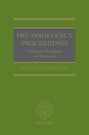
Oxford University Press recently published a book on pre-insolvency proceedings (aptly entitled) “Pre-Insolvency Proceedings, A Normative Foundation and Framework”. It is authored by Nicolaes Tollenaar and includes a foreword from Justice Richard Snowden.
The book develops a normative foundation for pre-insolvency proceedings and provides a framework outlining what an ideal pre-insolvency procedure might look like. It discusses the key economic and legal principles underlying restructuring proceedings, the system of voting in classes, the appropriate criteria for cram down and valuation. It further offers a comparative analysis of UK schemes and the Chapter 11 plan procedure with a view to drawing on the lessons learned from each.
The book is an updated translation of the (Dutch) PhD of the author (previously presented on this blog) and is available at: https://global.oup.com/academic/product/pre-insolvency-proceedings-9780198799924?cc=nl&lang=en&
Agreement on a new approach to business insolvency in Europe
Yesterday, a political agreement was reached by the European Parliament and EU Member States on a set of European rules on business insolvency. The text must now be formally adopted by the European Parliament and the Council of the EU. Following final adoption, the Directive will be published in the EU’s Official Journal and enter into force 20 days later. Continue reading “Agreement on a new approach to business insolvency in Europe”
Cross-border restructuring and insolvency post-Brexit
The Conference of European Restructuring and Insolvency Law (CERIL) published its report on cross-border restructuring and insolvency post-Brexit today. In its report, CERIL highlights the relationship between the EU and the UK after Brexit in the area of restructuring and insolvency law and seeks to formulate a position on the nature and content of a possible future instrument governing that relationship. The report can be found here.
Het nieuwe Wetboek van vennootschappen en verenigingen: (r)evolutie? Studienamiddag TBH/RDC 14 november 2018
Op 14 november 2018 organiseert het Tijdschrift voor Belgisch Handelsrecht / Revue de Droit Commercial Belge een studienamiddag over het nieuwe vennootschapsrecht dat in de steigers staat. Het belang van (ook) deze hervorming voor de rechtspraktijk kan moeilijk overschat worden. Veel innovaties zullen het vennootschapsrecht drastisch veranderen. Onder meer: de vermindering van het aantal vennootschapsvormen, de afschaffing van bepalingen van het huidige wetboek die duidelijk verouderd zijn of die onnodige obstakels vormen voor het moderne en dynamische functioneren van vennootschappen, de herschikking van het huidige regime van de besloten vennootschap, dat een geheel nieuw vehikel zal worden, flexibel en zonder kapitaal, de mogelijkheid voor beursgenoteerde vennootschappen om een systeem in te voeren waarbij bepaalde aandelen een dubbel stemrecht hebben; de invoering van een plafond voor de vaststelling van bestuurdersaansprakelijkheid, de integratie van het verenigingsrecht, …
Continue reading “Het nieuwe Wetboek van vennootschappen en verenigingen: (r)evolutie? Studienamiddag TBH/RDC 14 november 2018”
Publicatie: Le droit des contrats à l’épreuve de la faillite
De gevolgen van een faillissement voor lopende overeenkomsten geven aanleiding tot een veelheid van boeiende praktische en theoretische vragen. Om deze vragen te beantwoorden was tot voor kort geen standaardwerk beschikbaar. Dit standaardwerk is er nu wel, in de vorm van de publicatie van het proefschrift van dr. Florence George. À ne pas rater.
De vennootschapsgroep: onderneming in het nieuwe insolventierecht?
Een recente beslissing van het United States Court of Appeal for the Ninth Circuit (voor een bespreking zie hier) nodigt uit om enkele woorden te wijden aan het statuut van de vennootschapsgroep onder het nieuwe insolventierecht. Aan de orde was de vraag of, in het kader van een Chapter 11 procedure, de stemming over het reorganisatieplan “per plan” of “per schuldenaar” moet gebeuren. Continue reading “De vennootschapsgroep: onderneming in het nieuwe insolventierecht?”
Recht is belangenafweging: Cassatie over de verhouding tussen boedelschuldeisers en zekerheidsschuldeisers
Recht is belangenafweging. Deze (evidente) waarheid is terug te vinden in zelfs de meest technische bepaling. Een mooi voorbeeld hiervan wordt geboden door de regeling voorzien in art. 37 WCO (binnenkort: art. XX.58 WER). Dit artikel bepaalt ten eerste het statuut van schuldvorderingen die beantwoorden aan prestaties uitgevoerd tijdens de procedure van gerechtelijke reorganisatie in een navolgende vereffening of faillissement en ten tweede de verhouding tussen deze schuldvorderingen en de rechten van zekergestelde schuldeisers. Een recent cassatiearrest van 22 februari 2018 (C.17/0503.N/1) luidt een ommekeer in wat deze verhouding betreft. Continue reading “Recht is belangenafweging: Cassatie over de verhouding tussen boedelschuldeisers en zekerheidsschuldeisers”
Cross-border Insolvencies after Brexit: Views from the United Kingdom and Continental Europe
A recent paper of the Centre for International Governance Innovation and the British Institute of International and Comparative Law examines the consequences of Brexit for cross-border insolvencies. The conclusion of the paper reads as follows:
Whatever the outcome of the Brexit negotiations might be, it is possible that the United Kingdom will lose at least part of its attraction as a restructuring and insolvency hub for the remaining member states of the European Union.

