A post by Gillis Waelkens and Stéphanie De Smet (Clifford Chance)
On 18 March 2026, the European Commission proposed a new harmonised corporate legal form, the “EU Inc.”, intended to remove fragmentation in EU company law and make it significantly easier for innovative businesses to start, operate and scale across the European market.
Previous attempts to create an EU‑wide company form (most notably the Societas Europaea (SE)) failed to gain broad traction due to their complexity and high entry thresholds. By contrast, the EU Inc. proposal – designed as an optional ‘28th regime’ that sits alongside existing national company forms or the SE – combines fully digital procedures, 48‑hour fast‑track incorporation, no minimum capital, flexible governance and capital structures, and a pan‑European alignment of employee stock option taxation, making it one of the most ambitious corporate law reforms in recent years.
The publication of the EU Inc. proposal starts negotiations between the European Commission, the European Parliament and the Council, and the draft Regulation will be amended as a result of those discussions. The Commission aims to reach an agreement by the end of 2026 (with entry into force in 2027 or 2028), but given the wide-ranging impact it is likely that the new regime will not be available for use before 2029.
This post outlines what the EU Inc. will look like based on the Commission’s proposal and how it may affect legal structures in the European Tech and Private Capital sectors.
Een post door meester Maximilien Arnoldy (Janson en VUB)
De invoering van een nieuw Strafwetboek in België was, en is nog steeds, een moeizaam proces. Sinds het ministerieel besluit van 30 oktober 2015, waarbij de Commissie voor de Hervorming van het Strafrecht werd opgericht, werd geprobeerd een nieuw Strafwetboek uit te werken, maar dat verliep bijzonder stroef. Zo stroef zelfs dat de leden van de commissie in 2019 ontslag namen.
In 2020 werd de commissie opnieuw samengesteld en in februari 2024 was het dan eindelijk zover: na meer dan 150 jaar beschikt België over een nieuw Strafwetboek, dat oorspronkelijk op 8 april 2026 in werking zou treden. Terwijl rechtspractici zich op de toepassing ervan voorbereidden, volgde echter een nieuwe valse start: de inwerkingtreding werd uitgesteld tot 1 september 2026.
Na dit uitstel lijkt het evenwel waarschijnlijk dat het nieuwe Strafwetboek binnen enkele maanden effectief in werking zal treden. Dit is dan ook het uitgelezen moment om stil te staan bij de wijzigingen met betrekking tot een van de kernmisdrijven van het ondernemingsstrafrecht: het misbruik van vennootschapsgoederen. Hieronder volgen de vier belangrijkste aandachtspunten.
Eerste aandachtspunt: uitbreiding tot alle rechtspersonen
Artikel 492bis van het Strafwetboek van 1867 beschermt (i) vennootschappen met rechtspersoonlijkheid en (ii) verenigingen zonder winstoogmerk. Concreet betekende dit dat misbruik van vennootschapsgoederen mogelijk was – naast ten nadele van verenigingen zonder winstoogmerk – ten nadele van de vennootschap onder firma, de commanditaire vennootschap, de besloten vennootschap, de coöperatieve vennootschap, de naamloze vennootschap, de Europese vennootschap en de Europese coöperatieve vennootschap (art. 1:5, §2 WVV). Misbruik van vennootschapsgoederen was daarentegen niet mogelijk ten nadele van een maatschap (wel een vennootschap, maar zonder rechtspersoonlijkheid; art. 1:5, §1 WVV), een feitelijke vereniging (geen vennootschap en geen rechtspersoonlijkheid; art. 1:6, §1 WVV), een stichting (wel rechtspersoonlijkheid, maar geen vennootschap; art. 1:7 WVV) of een Europees economisch samenwerkingsverband (wel rechtspersoonlijkheid, maar geen vennootschap; art. 1:5, §3 WVV). Over de vraag of de internationale vereniging zonder winstoogmerk binnen het toepassingsgebied van artikel 492bis viel, bestond discussie.
Artikel 476 van het Strafwetboek van 2024 beperkt zich niet langer tot vennootschappen met rechtspersoonlijkheid en verenigingen zonder winstoogmerk, maar breidt het toepassingsgebied uit tot alle rechtspersonen. Dit heeft tot gevolg dat het misdrijf, na de inwerkingtreding van het nieuwe Strafwetboek, naast de voormelde vennootschappen met rechtspersoonlijkheid, ook kan worden gepleegd ten nadele van stichtingen (zowel private als van openbaar nut) en ten nadele van Europese economische samenwerkingsverbanden. Ook valt de internationale vereniging zonder winstoogmerk voortaan onbetwistbaar onder het toepassingsgebied van het misbruik van vennootschapsgoederen. Maatschappen en feitelijke verenigingen beschikken evenwel niet over rechtspersoonlijkheid en blijven bijgevolg uitgesloten van het toepassingsgebied van deze incriminatie.
Het is echter de vraag of er een verantwoorde reden bestaat om maatschappen en feitelijke verenigingen van het misdrijf uit te sluiten. Hoewel deze entiteiten geen rechtspersoonlijkheid bezitten, beschikken zij wel over een afgescheiden vermogen dat door hun bestuurders kan worden misbruikt. In dat geval kunnen deze bestuurders niet worden vervolgd wegens misbruik van vennootschapsgoederen, terwijl bestuurders die identieke handelingen stellen binnen een vereniging zonder winstoogmerk of een stichting wél strafrechtelijk aansprakelijk kunnen worden gesteld. Naar onze mening is dit onderscheid moeilijk te verantwoorden en verdient het aanbeveling om ook maatschappen en feitelijke verenigingen onder het toepassingsgebied van het misbruik van vennootschapsgoederen te brengen.
Tweede aandachtspunt: de onduidelijkheid over de notie ‘privaatrechtelijke’ rechtspersoon
Naast de uitbreiding van het toepassingsgebied van het misdrijf tot alle rechtspersonen, preciseert het nieuwe Strafwetboek dat het misdrijf enkel toepasselijk is ten aanzien van ‘privaatrechtelijke’ rechtspersonen. Wat de wetgever daarmee precies voor ogen had, is evenwel niet geheel duidelijk. Deze wijziging lijkt immers niet voort te vloeien uit een initiatief van de Commissie voor de Hervorming van het Strafrecht, maar uit een voorstel van de Raad van State tot aanpassing van de benaming van het misdrijf: “In artikel T5H1A2OA1-2 is sprake van ‘een burgerlijke en handelsvennootschap of van een vereniging zonder winstoogmerk’. Het verdient dan ook de voorkeur het misdrijf te omschrijven als ‘misbruik van goederen van een privaatrechtelijke rechtspersoon’ in plaats van ‘misbruik van vennootschapsgoederen’” (Adv. RvS 23 november 2018, nrs. 64.121/1 en 64.126/1, punt 92).
Deze wijziging dient te worden gelezen in samenhang met het principearrest van het Hof van Cassatie van 21 juni 2006 (P.06.0848.F, ECLI:BE:CASS:2006:ARR.20060621.14). In dat arrest oordeelde het Hof dat uit de algemene bewoordingen van artikel 492bis van het Strafwetboek van 1867 en uit de parlementaire voorbereiding volgt dat deze bepaling van toepassing is op bestuurders van alle burgerlijke of handelsvennootschappen met rechtspersoonlijkheid en van verenigingen zonder winstoogmerk, zonder onderscheid naargelang deze rechtspersonen al dan niet een publiekrechtelijk karakter hebben. Hierbij dient evenwel een belangrijke nuance te worden aangebracht. Het arrest stelt met name niet dat het misdrijf van toepassing is op alle publiekrechtelijke rechtspersonen, maar slechts dat het van toepassing is op vennootschappen met rechtspersoonlijkheid of verenigingen zonder winstoogmerk, zonder onderscheid of die rechtspersonen al dan niet een publiekrechtelijk karakter hebben. Het Hof stelt met andere woorden dat het misdrijf van toepassing kan zijn op publiekrechtelijke rechtspersonen die één van de rechtsvormen van het privaatrecht, overeenkomstig het toenmalige W.Venn. en vandaag het WVV, hebben aangenomen.
De expliciete toevoeging van de notie ‘privaatrechtelijke’ rechtspersonen kan bijgevolg tot verwarring leiden. Mede gelet op de autonomie van het strafrecht, kunnen uit deze terminologie twee interpretaties voortvloeien:
Indien de notie ‘privaatrechtelijke’ wijst op het maatschappelijk doel zou men hieruit kunnen afleiden dat het nieuwe misdrijf misbruik van vennootschapsgoederen, in tegenstelling tot het hierboven besproken cassatiearrest, slechts van toepassing is op rechtspersonen die een privaatrechtelijk doel nastreven en niet op rechtspersonen die een publiekrechtelijk doel nastreven;
Indien de notie ‘privaatrechtelijke’ wijst op de rechtsvorm, dan zou men hieruit kunnen afleiden dat het misdrijf misbruik van vennootschapsgoederen, in dezelfde lijn als het hierboven besproken cassatiearrest, slechts van toepassing is op rechtspersonen die een privaatrechtelijke rechtsvorm van het WVV aannemen (ongeacht hun maatschappelijk doel) en niet op rechtspersonen die een rechtsvorm buiten het WVV hebben aangenomen.
Hoogstwaarschijnlijk had de wetgever de tweede interpretatie voor ogen en was het geenszins de bedoeling om rechtspersonen met een publiekrechtelijk karakter, maar met een privaatrechtelijke rechtsvorm van het WVV, uit het toepassingsgebied van het misdrijf te sluiten. Dit blijkt ook impliciet uit de memorie van toelichting, waarin uitdrukkelijk wordt gesteld dat de bestaande definitie van het misdrijf wordt overgenomen met het oog op het behoud van de verworvenheden uit de rechtspraak en de rechtsleer over de draagwijdte en interpretatie ervan (Parl.St. Kamer 2022-2023, nr. 3518/001, 464).
Derde aandachtspunt: de bestraffing, in het bijzonder de geldstraf vastgesteld op basis van het (verwachte) vermogensvoordeel, en de toepassing van de strafwet in de tijd
Artikel 492bis van het Strafwetboek van 1867 voorziet voor natuurlijke personen in een gevangenisstraf van een maand tot vijf jaar en een geldboete van 100 tot 500.000 EUR. Met toepassing van 70 deciemen kan deze geldboete oplopen tot 4 miljoen EUR en, voor feiten gepleegd na 1 februari 2026 (90 deciemen), zelfs tot 5 miljoen EUR. Voor rechtspersonen bedraagt de geldboete, op grond van het in artikel 41bis Sw. 1867 voorziene conversiemechanisme, maximaal 1 miljoen EUR. Na toepassing van de opdeciemen kan dit oplopen tot 8 miljoen EUR en, voor feiten gepleegd na 1 februari 2026, tot 10 miljoen EUR.
Artikel 476 van het Strafwetboek van 2024 voorzag voor misbruik van vennootschapsgoederen oorspronkelijk in een straf van niveau 2, maar dit werd uiteindelijk een straf van niveau 3. Voor natuurlijke personen betreft dit een gevangenisstraf van drie tot vijf jaar (art. 36 Sw. 2024) en een geldboete van 200 tot 10.000 EUR (art. 52 Sw. 2024). Voor rechtspersonen kan de geldboete als hoofdstraf oplopen tot 600.000 EUR (art. 38 Sw. 2024). Hoewel op deze vermogensstraffen onmiddellijk 2,5 opdecimes (x 1,25) zullen moeten worden toegepast, lijken de straffen voor misbruik van vennootschapsgoederen in het nieuwe Strafwetboek op het eerste gezicht aanzienlijk lager dan onder het Strafwetboek van 1867.
Dat de strafmaat in werkelijkheid minder zwaar zou zijn, is evenwel slechts schijn. De wetgever erkent dit ook uitdrukkelijk. Het nieuwe Strafwetboek voorziet immers in de mogelijkheid voor de rechter om een geldstraf op te leggen die wordt vastgesteld op basis van het (verwachte) vermogensvoordeel dat uit het misdrijf werd behaald (art. 55 Sw. 2024). Deze geldstraf beoogt de dader financieel te sanctioneren in verhouding tot de concrete economische inzet van het misdrijf en kan worden opgelegd bovenop een eventuele verbeurdverklaring. Wanneer het misdrijf ertoe strekte rechtstreeks of onrechtstreeks een vermogensvoordeel te behalen, en de rechter de wettelijk bepaalde geldboete ontoereikend acht, kan hij dader veroordelen tot betaling van een bedrag dat overeenstemt met maximaal het drievoud van het vermogensvoordeel dat werd behaald of beoogd, in plaats van de bijkomende geldboete.
Voor feiten die werden gepleegd vóór de inwerkingtreding van het nieuwe Strafwetboek, maar pas nadien worden berecht, dient te worden nagegaan welke strafwet de meest gunstige is voor de beklaagde (art. 2 Sw. 1867 / 2024). Dit vergt o.i. een concrete beoordeling van de mogelijke financiële impact van beide regimes:
Indien een beklaagde (natuurlijke persoon) vóór de inwerkingtreding van het Strafwetboek van 2024 misbruik van vennootschapsgoederen pleegt en na de inwerkingtreding ervan wordt berecht, en hij uit dit misdrijf een vermogensvoordeel van 1 miljoen EUR heeft behaald of beoogd, dan kan de rechter op grond van artikel 492bis Sw. 1867, na toepassing van 90 opdeciemen (voor feiten vanaf 1 februari 2026), een maximale geldboete van 5 miljoen EUR opleggen. Onder het Strafwetboek van 2024 kan de rechter – indien hij de geldboete van 10.000 EUR (te vermenigvuldigen met 1,25) onvoldoende acht – op basis van artikel 55 Sw. 2024 een geldstraf opleggen tot maximaal 3 miljoen EUR (het drievoud van het vermogensvoordeel). In dat geval is het nieuwe Strafwetboek gunstiger en dient het te worden toegepast.
Indien dezelfde beklaagde evenwel uit dit misdrijf 5 miljoen EUR heeft behaald of hoopte te behalen, dan zal de maximale geldboete van 5 miljoen EUR van artikel 492bis Sw. 1867 gunstiger zijn dan de maximale geldstraf van 15 miljoen EUR (3 x 5 miljoen EUR) die de rechter zou kunnen opleggen op basis van artikel 55 Sw. 2024. De geldboete van Sw. 1867 zal dan moeten worden toegepast.
Vierde aandachtspunt: het residuaire karakter van het misbruik van vennootschapsgoederen ten aanzien van misbruik van vertrouwen
Het misdrijf van misbruik van vennootschapsgoederen is nauw verwant met het misdrijf van misbruik van vertrouwen. Zowel in het Strafwetboek van 1867 als in het Strafwetboek van 2024 is het misbruik van vennootschapsgoederen ondergebracht in de (onder)afdeling “Misbruik van vertrouwen”.
Bij de invoering van het misbruik van vennootschapsgoederen in het Strafwetboek, via de Faillissementswet van 1997, heeft de wetgever ervoor gekozen om het misdrijf te beperken tot gedragingen die op betekenisvolle wijze afbreuk doen aan de vermogensbelangen van de rechtspersoon en die van zijn schuldeisers of vennoten. Hiermee wilde de wetgever “vermijden dat bagatelzaken aan de strafrechter zouden worden voorgelegd, en zo verstikkend zouden […] werken op het normale functioneren van een vennootschap” (amendement nr. 114 (VANDENBERGHE H.) op het ontwerp van faillissementswet, Parl.St. Senaat 1996-1997, nr. 1-499/7, 4-5). Omdat aldus enkel de zwaarste misbruiken onder het toepassingsgebied van het misdrijf vielen, voorzag het Strafwetboek van 1867 in aanzienlijk zwaardere pecuniaire straffen voor misbruik van vennootschapsgoederen dan voor misbruik van vertrouwen: maximaal 500.000 EUR tegenover maximaal 500 EUR.
Het is evenwel mogelijk dat een bestuurder tegelijkertijd zowel misbruik van vertrouwen als misbruik van vennootschapsgoederen pleegt. Gelden van een vennootschap zijn immers ten bede toevertrouwd aan haar bestuurders, die deze gelden enkel mogen beheren en besteden in het belang van de vennootschap. Er kan dan bijgevolg ook sprake zijn van misbruik van vertrouwen wanneer de bestuurder van een vennootschap zich persoonlijk gelden van die vennootschap toe-eigent (zie bv. P.22.1716.N, ECLI:BE:CASS:2023:ARR.20230321.2N.7). In dergelijke gevallen is er sprake van eendaadse samenloop, waarbij enkel de zwaarste straf wordt uitgesproken (art. 65 Sw. 1867; art. 61 Sw. 2024).
Onder het regime van het Strafwetboek van 1867 had het openbaar ministerie er, ondanks de zwaardere bewijslast voor misbruik van vennootschapsgoederen (met name het vereiste van een betekenisvol nadeel), belang bij om dit misdrijf te vervolgen, gelet op de aanzienlijk hogere straffen.
Onder het nieuwe Strafwetboek worden evenwel identieke strafniveaus voorzien voor misbruik van vertrouwen en misbruik van vennootschapsgoederen (strafniveau 3), eventueel aangevuld met een geldstraf vastgesteld op basis van het (verwachte) vermogensvoordeel (zie supra). Dit heeft tot gevolg dat het openbaar ministerie bij eendaadse samenloop tussen beide misdrijven in beginsel geen specifiek vervolgingsbelang meer heeft om te opteren voor misbruik van vennootschapsgoederen.
Met andere woorden: het misbruik van vennootschapsgoederen dreigt een residuair misdrijf te worden, dat in de praktijk enkel nog zal worden toegepast wanneer de feiten niet onder het toepassingsgebied van misbruik van vertrouwen vallen. Gelet op de recente uitbreiding bij wet van 12 juli 2023 van het toepassingsgebied van misbruik van vertrouwen tot alle roerende goederen, zowel lichamelijke als onlichamelijke, kan hierbij in het bijzonder worden gedacht aan twee hypothesen:
wanneer er geen sprake is van verduistering of verspilling in de zin van misbruik van vertrouwen, maar wel van een ongeoorloofd gebruik in de zin van misbruik van vennootschapsgoederen. De notie ‘gebruik’ in laatstgenoemd misdrijf is immers ruimer dan de noties ‘verduistering’ en ‘verspilling’ in het kader van misbruik van vertrouwen;
wanneer het geen roerende goederen betreft. Het toepassingsgebied van misbruik van vennootschapsgoederen is immers niet beperkt tot roerende goederen, maar omvat in ruime zin de goederen en het krediet van de rechtspersoon.
Enkel in dergelijke situaties – waarin geen sprake is van eendaadse samenloop – zal het openbaar ministerie onder het nieuwe Strafwetboek nog een vervolgingsbelang hebben bij het misdrijf van misbruik van vennootschapsgoederen.
Het volledige onderzoek van de auteur naar het misbruik van vennootschapsgoederen onder het Strafwetboek van 1867 en het Strafwetboek van 2024 is opgenomen in het verzamelwerk Juridische Meesterwerken VUB 2026 (Juridische Meesterwerken VUB – Uitgave 2026 – Knopspublishing en beschikbaar via Strada lex).
Today, the Council gave the final stamp to a new EU law harmonising key aspects of insolvency rules across the EU. Member states have 33 months to transpose the directive into national law. From the press release of the Commission:
‘The EU common rules for insolvency proceedings include measures for:
Avoidance action: challenge transactions made by the debtor before the start of the bankruptcy procedure, thus protecting the insolvency estate against the illegitimate removal of assets.
Tracing assets: allow authorities, at the request of insolvency practitioners, to search bank account registers across the EU to identify assets of insolvent companies.
Pre-pack proceedings: enable the sale of a company in financial difficulty to be negotiated before the opening of formal proceedings and executed shortly after, while maintaining contracts which are essential for the continuation of the business.
Directors’ duties: require directors to file for insolvency within three months of financial distress, helping maximise recovery for creditors while allowing flexibility if alternative measures protect creditors equally.
Creditors’ committees: strengthen the involvement of individual creditors in the proceedings.
Transparency: require each country to publish clear factsheets on its insolvency laws, which will be made available on the EU’s e-Justice portal.’
Zonder ongelukken zitten er belangrijke wijzigingen aan het WVV aan te komen. België moet een reeks Europese Richtlijnen omzetten, waaronder een Richtlijn Meervoudig Stemrecht (MVS), de Tweede Digitaliseringsrichtlijn en de Women on Board-Richtlijn, om de CSDDD zoals gewijzigd door Omnibus niet te vergeten, en minister van Justititie Verlinden heeft in haar beleidsverklaring Justititie 2025-26 (Parl. St. Kamer Doc 56, 0767/017, p. 22) een evaluatie van het WVV op de agenda gezet. Minister Verlinden heeft aan het Belgisch Centrum voor Vennootschapsrecht gevraagd te helpen bij het schrijven van een voorontwerp van wet ter omzetting van de MVS-richtlijn (zie reeds hier). Stijn Deschepper van de FOD Justitie houdt de pen, maar een gans BCV-team (waaronder ondergetekende) biedt input, en alle werkstromen worden gecoördineerd door Marieke Wyckaert, BCV-voorzitter.
Het Instituut Financieel Recht organiseert op 19 mei een studienamiddag waarop een aantal auteurs van het wetsontwerp de toekomstige wijzigingen aan het WVV toelichten, binnen het kader van de bestaande regelingen rond soortrechten, meervoudig stemrecht en intern reglement, waarvan de problemen eerst nog eens geschetst zullen worden.
De Richtlijn Meervoudig Stemrecht (MVS) (Richtlijn (EU) 2024/2810 van 23 oktober 2024) verplicht Lidstaten om meervoudig stemrecht in te voeren voor vennootschappen die op een MTF (Multilateral Trading Facility, beursplatformen die geen gereglementeerde markt zijn en soms bedoeld zijn voor “groeibedrijven”, zoals Euronext Growth ) willen noteren,. De MVS-Richtlijn is onderdeel van de Listing Act, die ernaar streefde de Europese kapitaalmarkten te verdiepen. De gedachte daarbij was dat oprichters van start-ups vlugger naar de beurs zouden trekken indien zij via MVS de controle kunnen behouden. Maar terecht heeft men in België geoordeeld dat er geen reden is om meervoudig stemrecht alleen voor op een MTF genoteerde vennootschappen mogelijk te maken. In België is sinds 2019 (invoering WVV) meervoudig stemrecht mogelijk bij niet-genoteerde vennootschappen, en dubbel loyauteitsstemrecht bij genoteerde vennootschappen. Men wil de MVS-Richtlijn nu zo omzetten dat meervoudig stemrecht ook mogelijk wordt bij genoteerde vennootschappen, met een maximummultiplicator van 20 stemmen per aandeel (naast het loyauteitsstemrecht dat uiteraard niet wordt afgeschaft als mogeljkheid).
Maar omdat aandelen met meervoudig stemrecht een aparte soort van aandelen (in de technische betekenis van art. 7:60 WVV) zijn, moeten de soortwijzigingsregels uit het WVV (art. 7:155) aangepast worden om de invoering van meervoudig stemrecht beursvennootschappen mogelijk te maken, zeker nu dit niet alleen pre-IPO maar ook “midstream”, na de beursgang, mogelijk moet zijn. De wetgever heeft in 2019 geprobeerd de soortwijzigingsregels te verduidelijken en vereenvoudigen, maar heeft toen helaas ook nieuwe interpretatieproblemen gecreëerd. In de praktijk klaagt men dat de nieuwe regels te vaak moeten toegepast worden en dan te vaak een blokkeringsmogelijkheid geven aan een minderheid van aandeelhouders. De omzetting van de MVS-Richtlijn zal daarom ook gebruikt worden om de soortwijzigingsregels grondig bij te spijkeren, zodat bv. ook verduidelijkt wordt hoe men meervoudig stemrecht kan invoeren zonder nieuwe aandelen uit te geven, maar ander stemrecht te geven aan sommige maar niet alle van de bestaande aandelen (“soortsplitsing”).
België is niet alleen verplicht de MVS-Richtlijn om te zetten (tegen eind 2026), maar moet ook dringend werk maken van de aanpassing van het WVV aan arresten van het Grondwettelijk Hof over het intern reglement en over de verjaringstermijnen voor een aantal vennootschapsrechtelijke aansprakelijkheidsvorderingen. Zo moet men ook buiten de coöperatieve vennootschap de mogelijkheid krijgen om in een intern reglement aangelegenheden te regelen die verband houden met de rechten van aandeelhouders (bv. winstverdelingsafspraken in vennootschappen van vrije beroepers), maar uiteraard moet dit met de nodige waarborgen voor aandeelhouders omkaderd worden. Het is de bedoeling dit in hetzelfde voorontwerp van wet te regelen.
Al deze cruciale wijzigingen aan het WVV (meervoudig stemrecht; soortwijzigingen; intern reglement) komen aan bod op een studienamiddag van het Instituut Financieel Recht van de UGent op 19 mei 2026 . Op dezelfde namiddag wordt ook die andere belangrijke Richtlijn, de CSDDD na Omnibus, besproken.
Het Instituut Financieel Recht zou zijn naam uiteraard geen eer aan doen indien het niet ook studienamiddagen over bank-en financieel recht zou organiseren: de aftrap wordt gegeven op 31 maart met een dag over consumentenbescherming in het financieel recht. Op 21 april volgt een namiddag over cryptofinance en op 2 juni komen een aantal transversale thema’s uit het financieel recht aan bod, zoals de opgang van private credit en ontwikkelingen in de effectiseringsmarkt of nog het toezicht op en de afwikkeling van financiële instellingen.
Stel: een Belgische aandeelhouder verstrekt een lening (onderworpen aan Belgisch recht) aan een Duitse vennootschap. In de maanden voorafgaand aan de opening van een Duitse insolventieprocedure m.b.t. de Duitse vennootschap worden een aantal betalingen gedaan ter aflossing van de lening. Het risico van de Belgische aandeelhouder neemt hierdoor af.
In de Duitse insolventieprocedure wil de Belgische aandeelhouder voor het saldo van de lening een schuldvordering indienen. De Duitse curator zegt: “niet zo snel, uw schuldvordering – Belgische aandeelhouder – wordt niet toegelaten en bovendien zou ik graag alles terugkrijgen wat u recent hebt ontvangen. De rechtsbasis, zo vraagt u: § 39 en § 135 Insolvenzordnung.”
Ziedaar de (naar een Belgische context aangepaste) feiten die ten grondslag liggen aan het arrest van het Hof van Justitie van 19 maart 2026. Dit arrest is uitgesproken met toepassing van de oude Insolventieverordening maar het resultaat blijft identiek gelden onder de nieuwe Insolventieverordening
Naar Duits recht (lex fori concursus) zijn de vorderingen van de (in ons voorbeeld Belgische) aandeelhouder “vorderingen van lagere rang” waarbij “de ter zake bevoegde rechter schuldeisers die lager in rang staan niet heeft verzocht hun vorderingen in te dienen, hetgeen een voorwaarde is voor hun deelname aan de insolventieprocedure” (nr. 18 arrest). De eerder verrichte aflossingen moeten aan de boedel worden terugbetaald (nr. 19 arrest).
De Belgische aandeelhouder, lichtjes verontwaardigd, antwoordt: “niet zo snel, ik ken die regeling waar u zo enthousiast naar verwijst helemaal niet, en het toepasselijke Belgische recht kent deze regeling evenmin. Gelieve niet moeilijk te doen.”
Wat domineert? De lex fori concursus of de lex causae? Dit vereist een analyse van het samenspel tussen art. 13 (17) InsolVo enerzijds en art. 4 (7), lid 2, onder m) InsolVo anderzijds.
Art. 4 (thans 7), lid 2, onder m):
Het recht van de lidstaat waar de procedure wordt geopend, bepaalt onder welke voorwaarden deze procedure wordt geopend, verloopt en wordt beëindigd. Het bepaalt met name:
(m) de regels betreffende nietigheid, vernietigbaarheid of niet-tegenwerpbaarheid van de voor de gezamenlijke schuldeisers nadelige rechtshandelingen.
Art. 13 (thans 17)
Artikel 4, lid 2, onder m), is niet van toepassing indien degene die voordeel heeft gehad bij een voor het geheel van schuldeisers nadelige handeling bewijst dat:
(a) deze handeling onderworpen is aan het recht van een andere lidstaat dan de lidstaat waar de procedure is geopend, en
(b) het recht van die lidstaat in het gegeven geval niet voorziet in de mogelijkheid om die handeling te bestrijden.
Het mechanisme is duidelijk. Artikel 13 (17) voorziet in de mogelijkheid bepaalde (rechts)handelingen te immuniseren voor het toepasselijke insolventierecht, door ze aan het recht van een andere lidstaat te onderwerpen (zie de commentaar van Gillis Lindemans op het arrest Vinyls). Een ideale ontsnapping voor de Belgische aandeelhouder, zo lijkt.
Toch niet, zo blijkt. Het Hof kadert de te beantwoorden rechtsvraag als volgt:
“In dat rechtskader moet de eerste vraag aldus worden begrepen dat de verwijzende rechter in wezen wenst te vernemen of artikel 13 van verordening nr. 1346/2000 aldus moet worden uitgelegd dat een persoon die betalingen ter aflossing van een aandeelhouderslening heeft ontvangen die als nadelig voor het geheel van schuldeisers worden beschouwd, zich op deze bepaling kan beroepen om een vordering tot terugbetaling daarvan die is ingesteld door de curator van de vennootschap waaraan de lening is verstrekt, af te weren wanneer die vordering ertoe strekt dat de rangorde van de vorderingen in acht wordt genomen zoals die is vastgelegd in de regeling van de staat waar de insolventieprocedure is geopend.
Vervolgens geeft het Hof een restrictieve invulling aan art. 13 (17):
“Hieruit volgt dat, aangezien artikel 13 van verordening nr. 1346/2000 een uitzondering vormt op artikel 4, lid 2, onder m), van die verordening, de werkingssfeer ervan beperkt is tot het in die bepaling genoemde geval, namelijk wanneer de vraag naar het toepasselijke recht betrekking heeft op de regels betreffende nietigheid, vernietigbaarheid of niet-tegenwerpbaarheid van de voor het geheel van schuldeisers nadelige rechtshandelingen, en niet wanneer het gaat om de regels die zien op welke vorderingen te verhalen zijn op het vermogen van de schuldenaar of welke rangindeling zij hebben.”
Het Hof geeft hiermee aan dat de uitzonderingsbepaling van art. 13 (17) geen betrekking heeft op de rangorde en de volgorde van verdeling van vorderingen, en besluit als volgt:
“Gelet op een en ander moet op de eerste vraag worden geantwoord dat artikel 13 van verordening nr. 1346/2000 aldus moet worden uitgelegd dat een persoon die betalingen ter aflossing van een aandeelhouderslening heeft ontvangen die als nadelig voor het geheel van schuldeisers worden beschouwd, zich niet op deze bepaling kan beroepen om een vordering tot terugbetaling daarvan die is ingesteld door de curator van de vennootschap waaraan de lening is verstrekt, af te weren wanneer die vordering ertoe strekt dat de rangorde van de vorderingen in acht wordt genomen zoals die is vastgelegd in de regeling van de staat waar de insolventieprocedure is geopend.”
Uit dit arrest kan worden afgeleid dat elke lidstaat meester is van de boedel, en kan bepalen welke schuldeisers (en in welke volgorde) worden toegelaten tot de boedel, waarbij deze keuze zich ook opdringt aan rechtsverhoudingen onderworpen aan een ander recht. Lidstaten hebben hiermee een belangrijk instrument in handen om de ontsnappingsroute van art. 13 (17) te neutraliseren.
Het Hof heeft zich beperkt tot dit antwoord, zonder de bijkomende vragen te beantwoorden. Zo blijft m.i. de vraag open of het recht dat van toepassing is op een lening die door een aandeelhouder van een kapitaalvennootschap aan de vennootschap is verstrekt, wordt beheerst door het vennootschapsrecht of het insolventierecht, en de impact daarvan op de vestigingsvrijheid (zie daarover, A. Van Hoe en M. Vanmeenen, “Shareholders’ loans at the crossroads between corporate and insolvency law : impact of the freedom of establishment on national insolvency law”, International Insolvency Law Review 2011, 468-479).
Een post door professoren Arnoud Boot (Universiteit Amsterdam), Harm-Jan de Kluiver (Radboud) en Philip Wallage (Universiteit Amsterdam en Vrije Universiteit)
De uitdaging: Amerikaanse suprematie
De Amerikaanse suprematie in big tech en de groei en macht van de toonaangevende tech companies, de ‘Magnificent’ Seven (Microsoft, Meta, Alphabet, Apple, Nvidia, Amazon en Tesla), leidt niet slechts tot ongemak over onze afhankelijkheid daarvan, maar roept ook de vraag op hoe Europa zelf tech-ondernemers kan creëren. In hun bekende rapporten zoeken Letta en Draghi, maar ook Pieter Wennink, het antwoord in een combinatie van een beleid gericht op het bevorderen van de bloei van innovatieve ondernemingen in Europa en het sterk vergemakkelijken van de toegang tot de kapitaalmarkt.
De EU wil innovatieve ondernemingen en toegang tot de kapitaalmarkt bevorderen
Tekenend voor een poging die beide doelstellingen te combineren is recente EU-regelgeving (Richtlijn 2024/2810) die de groei van innovatieve ondernemingen wil stimuleren door het aantrekkelijker te maken om buiten de grote beurzen om, aandelen te plaatsen, en zo geld op te halen op meer informele beurzen (zogenaamde Multilateral Trading Facilities; MTF’s). De crux van de nieuwe EU-regel is dat ondernemingen het recht krijgen om bij verhandeling op zo’n beurs oprichters of andere kernaandeelhouders aandelen met meer stemrecht te geven dan die van de overige aandeelhouders. Op die wijze kunnen bijvoorbeeld oprichters de macht in de onderneming behouden, ook bij een toestroom van nieuwe aandeelhouders.
Gisteren heeft de Ondernemingsrechtbank Henegouwen een tussenvonnis geveld in de zgn. Farmer case. Het vonnis kan hieronder worden geconsulteerd. Voor een beknopte toelichting wordt verwezen naar deze post van Mr Guillaume Croisant.
A post by Dr Warren de Waegh (University of Cape Town)
The most international kind of insolvency
There is arguably no line of business in which insolvencies are as international as in shipping. By their nature, ships are destined to be mobile and travel the seven seas. At the same time, ships are fictionally immobilised in the country of registration, often in an offshore open registry with faint connections to the shipowner’s country of origin, but with a favourable fiscal and regulatory regime. The choice of this registry is often pushed by ship financiers, who hold strong bargaining powers against the shipowner and enable the building and purchase of ships.
For its operation, shipowners typically resort to charterers, who sometimes may decide to register the ship in yet another country. Seafarers, the most vital links to the daily operation of the ship, are often recruited through shipping agencies in low-wages countries overseas. Along its voyages, the ship can be the object of various commercial and operational dealings in the different countries in which it calls port, e.g. with cargo interests, service providers and suppliers active in the port, pilotage and towage services, and shipyards. In addition, the ship can be faced with more inadvertent creditors, such as salvors, general average contributors, and creditors in tort following a collision or another maritime casualty.
When the shipowner becomes insolvent, all these sundry interests from different parts of the world suddenly face each other off. Against this highly international background, it is somewhat ironic that the administration of insolvencies of shipping companies or maritime insolvencies has proven to be challenging under existing cross-border insolvency instruments, such as the UNCITRAL Model Law on Cross-Border Insolvency (MLCBI) and the European Insolvency Regulation, recast (EIR). Given the pivotal role of shipping to global trade, the resulting chaos to the world economy can be enormous, as was illustrated most strikingly in the insolvency of the South Korean container shipping giant, Hanjin Shipping, now about ten years ago.
Vandaag stelt de Europese Commissie het zgn. 28ste regime voor, dat voorziet in de introductie van een pan-Europese rechtsfiguur, aangeduid als “EU Inc.” De achtergrond van deze innovatie is genoegzaam gekend. Opeenvolgende rapporten van Europese prominenten hebben blootgelegd dat de beloftes van de interne markt slechts gedeeltelijk gerealiseerd zijn. Een nieuwe, Europese, rechtsfiguur, die vlot opgericht kan worden, en zonder frictie doorheen de Europese Unie kan bewegen, wordt geacht een deel van de oplossing te zijn. Het voorstel van de Europese Commissie is omvangrijk, en zal dra en veelvuldig het voorwerp uitmaken van nadere analyse. Watch this space.
Enkele aandachtspunten kunnen nu reeds worden vermeld:
Digitalisering en standaardisering zijn de ordewoorden; transactiekosten moeten lager, hetgeen onmiddellijk de vraag doet rijzen of dit dan ook niet kan/moet voor de nationale rechtsfiguren;
EU Inc. moeten worden aangevuld met nationaal vennootschapsrecht. Zal dit de globale doelstelling ondergraven?
EU Inc. voorziet in een duidelijk fiscaal regime voor aandelenoptieplan: geen belasting upfront maar bij realisatie van de onderliggende aandelen. Een oud zeer in België. Hoe houdbaar zal het zijn om deze regeling niet ook te voorzien voor nationale rechtsvormen?
Wie het voorstel van de Europese Commissie leest (en zeker kritische juristen), ziet onmiddellijk vele hindernissen. Of EU Inc. de golden bullet wordt ter ontsluiting van de interne markt zal dan ook in belangrijke mate afhangen van het voluntarisme waarmee dit instrument in de praktijk wordt toegepast en door de nationale wetgevers wordt behandeld.
Gisteren keurde het Europees Parlement het voorstel van nieuwe Insolventierichtlijn goed. Waar de Europese wetgever voorheen focuste op IPR (Insolventieverordening) en gerechtelijke reorganisatie (Herstructureringsrichtlijn) zal nu ook het nationaal materieel faillissementsrecht moeten worden aangepast. Komen aan bod:
voorwaarden voor het aanvechten van transacties (pauliana);
de opsporing van activa over de grens heen door de toegang van insolventiefunctionarissen tot activaregisters te faciliteren;
voorbereiding en onderhandeling van een verkoop vóór de formele opening van de insolventieprocedure mogelijk (pre-pack);
plicht voor bestuurders om insolventieprocedure aan te vragen;
verbetering van de vertegenwoordiging van schuldeisers via schuldeiserscomités.
Verwacht wordt dat de Raad deze tekst in zijn huidige vorm snel zal goedkeuren. De praktijk doet er daarom best aan de komende wijzigingen aan het nationale faillissementsrecht te anticiperen. De omzetting van de Richtlijn komt einde deze maand aan bod op de eerste dag van de internationale conferentie van CERIL te Leuven, op 26 en 27 maart 2026. Inschrijven is nog mogelijk.
Bij vennootschappen dient een persoonlijke of zakelijke zekerheid die wordt gesteld voor de schuld van een derde en zonder een marktconforme vergoeding verantwoordbaar zijn vanuit het eigen belang van die rechtspersoon.
Daarmee heeft de rechtspersoon een grens aan het beheer van het vermogen die een natuurlijke persoon niet heeft (al zijn er bij natuurlijke personen ook wel een reeks aanvechtingsmogelijkheden voor verarmende handelingen). Dat is de ‘prijs’ die betaald moet worden om te kunnen genieten van vermogenssplitsing (beperkte aansprakelijk en afgescheiden vermogen).
In bv. een vennootschapsgroep zullen activa en passiva worden gecompartimentaliseerd door het oprichten van dochtervennootschappen, waarbij de activa van een entiteit enkel dienen tot verhaal van de schuldeisers van die entiteit en schulden niet kunnen worden verhaald bij andere entiteiten. De prijs die hiervoor betaald moet worden is dat er niet zomaar met activa en schulden geschoven kan worden, bv. door het aangaan van zekerheden. In dat opzicht is de toets aan het vennootschapsbelang een regel van vermogensbescherming die schuldeisers en (eventuele) minderheidsaandeelhouders van een dochtervennootschap wil beschermen.
Dat betekent geenszins dat een zekerheid gesteld voor een andere vennootschap binnen een groep per se strijdig is met het vennootschapsbelang. De rechtspraak erkent dat het individuele vennootschapsbelang op lange termijn gebaat kan met een opoffering op korte termijn in het groepsbelang (zie hierover bv. J. Vananroye, A. Van Hoe en G. Lindemans, “Curb Your Opportunism: Limits to Group Structures and Asset Partitioning in Insolvency in Belgium”, in The 800-Pound Gorilla. Limits to Group Structures and Asset Partitioning in Insolvency, NACIIL Preadviezen, Eleven, Den Haag, 2018, 40 e.v.).
Meestal wordt dit probleem enkel besproken voor vennootschappen met beperkte aansprakelijkheid. Ook andere (privaatrechtelijke) rechtspersonen moeten in principe handelen in hun eigen belang.
Hosted this year by KU Leuven, CERIL’s 4th International Conference will explore the rapidly expanding landscape of European restructuring and insolvency law. Once an area largely untouched by harmonisation efforts, this field has undergone remarkable transformation in the last years. With reforms driven by the EU’s Capital Markets Union and the prospect of a 28th company and insolvency law regime, change is underway.
This year’s programme will examine the implications of the new EU Insolvency Directive (Insolvency III) for legislators, courts, and practitioners. Building on last year’s CERIL statement, substantive discussions will focus on the European Insolvency Regulation 2015 ahead of the upcoming review. Looking ahead, the conference will explore what the next phase of development may bring — from the design of a 28th EU insolvency regime to the growing impact of digitalisation on restructuring and insolvency practice.
This year, we are pleased to welcome as key note speaker: Prof. René Repasi. He is a Member of the European Parliament, in this capacity he has acted as the shadow rapporteur for the new EU Insolvency Directive. In addition, he is currently the rapporteur for the EU 28th Regime for Innovative Companies, including the rules on insolvency law.
Aan het Instituut voor Insolventie (KU Leuven) zijn er twee vacatures voor een deeltijdse praktijkassistent met een 5% aanstelling.
We zoeken iemand met interesse in het insolventierecht die wil meewerken met het onderwijsteam insolventierecht onder leiding van professor Joeri Vananroye. Dit kan omvatten (deels in functie van de voorkeuren van de kandidaat) :
doceren werkcolleges (Leuven);
doceren onderwijsgroepen (Hasselt);
begeleiden seminaries en masterproeven.
Bij interesse kan de kandidaat ook ingeschakeld worden in het onderzoek van het Instituut (bv. door publiceren van bijdragen of spreken op studiedagen) en in onderwijstaken.
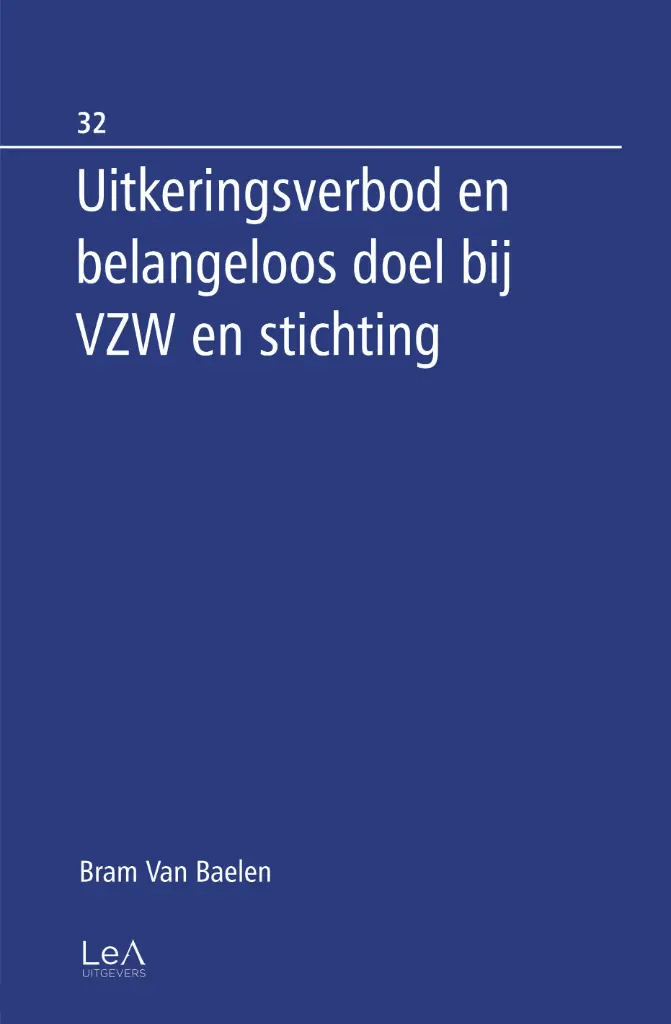
Volgens artikel 1:2 en 1:3 WVV streeft elke VZW of stichting “een belangeloos doel na in het kader van één of meer welbepaalde activiteiten die zij tot voorwerp heeft.” Regelmatig rijst de vraag: “Wat houdt een belangeloos doel precies in?” of ook “Wanneer is een doel belangeloos?” In deze blogpost verduidelijken we waarom die vraag niet eenduidig te beantwoorden is. Het ene belangeloos doel is immers niet het andere.
Artikel 1:2 en artikel 1:3 WVV definiëren het uitkeringsverbod als het verbod voor VZW en stichting om “rechtstreeks noch onrechtstreeks enig vermogensvoordeel uitkeren of bezorgen” aan haar oprichters, leden, bestuurders of enig ander persoon, behalve voor uitkeringen die gebeuren in het in de statuten bepaald belangeloos doel. Het uitkeringsverbod onderscheidt VZW’s en stichtingen van vennootschappen. Terwijl het vermogen van een VZW of stichting niet mag worden uitgekeerd aan de personen die het voor het zeggen hebben in de organisatie (de zogenaamde insiders), mogen vennootschappen daarentegen wel uitkeringen doen aan hun aandeelhouders, mits naleving van de wettelijke voorschriften.
Het belang van het uitkeringsverbod is niet te onderschatten.




 Corporate Finance Lab