On November the 26th of 2018 a debate on the added value of Corporate Social Responsibility (CSR) took place in Leuven. Both prof. dr. Marieke Wyckaert (KU Leuven) and em. prof. dr. Viktor Vanberg (Albert-Ludwigs-Universität Freiburg and Walter Eucken Institut) gave a short lecture and subsequently comment on each other’s point of view. Prof. dr. Joeri Vananroye moderated the debate. You can find the video of this debate below.
Category: *In English
Modernisation of Bankruptcy Procedure Act to enter into force in the Netherlands
A post by guestblogger Jochem Hummelen (NautaDutihl)
On 1 January 2019, the Modernisation of Bankruptcy Procedure Act (MBPA) (in Dutch: Wet Modernisering Faillissementsprocedure) is set to enter into force in the Netherlands. This act, which will apply to bankruptcies opened on or after 1 January 2019, is aimed at updating Dutch bankruptcy law to bring it more in line with modern practice. In this blog post, I give an overview of the background to the MBPA and the most important measures provided for in this law. Continue reading “Modernisation of Bankruptcy Procedure Act to enter into force in the Netherlands”
The Economic and Monetary Constitution
On November the 27th of 2018 emeritus professor Viktor Vanberg of the University of Freiburg gave a lecture at the Research Unit Economic Law of the KU Leuven about the constitutional approach in economics. In his lecture he explained the rules-based approach defended by the Freiburg School of Ordoliberalism and the Viriginia School of Constitutional Economics. You can find the video of this lecture below.
Glen Weyl presents “Radical Markets” (co-written with E. Posner) at the Brussels’ campus of KU Leuven
Prof. Glen Weyl (Microsoft Research & Princeton University) will present his book “Radical Markets”, co-written by Prof. Eric Posner
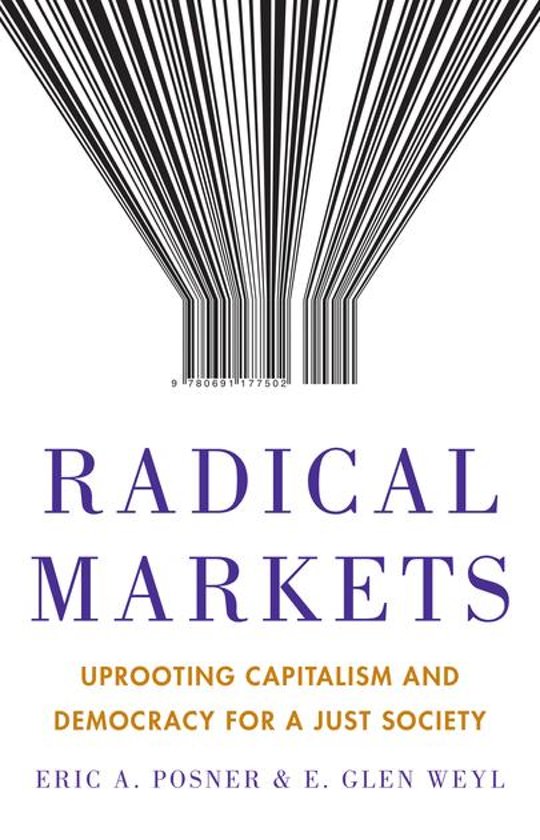
Tuesday 4 December 2018 Glen Weyl, Principal Researcher at Microsoft Research and a Visiting Senior Research Scholar at Yale’s Law School and Economics Department, will present at the Brussels’ campus of KU Leuven his book “Radical Markets“, co-written with Eric Posner (University of Chicago).
The Economist called this book “(A)n arresting if eccentric manifesto for rebooting liberalism…the policies they advocate…may help jolt liberals out of their hand-wringing, and shape a new line of market-oriented thinking, as Milton Friedman’s ‘Capitalism and Freedom’ did…refreshing and welcome in its willingness to question received wisdom…(L)iberals must find some antidote to populism and protectionism. A little outlandishness may be necessary.” Nobel Prize laureat Jean Tirole commented: “Whether you are convinced by the specific proposals or not, your confidence in your worldview may well be shattered by the depth and originality of the analysis.
Continue reading “Glen Weyl presents “Radical Markets” (co-written with E. Posner) at the Brussels’ campus of KU Leuven”
‘Enterprise liability’ for entities of a group?
Allowing creditors of one member of a corporate group to pierce horizontally to reach the assets of other members

Belgian private law is traditionally very distrustful of asset partitioning in the shape of both owner shielding and entity shielding. It has inherited from the 19th century French doctrine (Aubry & Rau) the idea that: (i) only persons have an estate; and (ii) every person has only one estate. An ‘estate’ (‘vermogen’ / ‘patrimoine’) is a pool of assets which serves as collateral for a pool of liabilities. Accordingly, the traditional théorie du patrimoine entails that a person cannot have separate pools of assets which serve as collateral for separate pools of liabilities. This theory betrays a strong distrust of asset partitioning, both internal and external.
In the beginning of the 19th century the rule ‘one person, one and only one estate’ was generally understood as referring to natural persons. The incorporation of legal persons, particularly of legal persons with owner shielding (limited liability), was exceptional and restricted. It was limited to certain types of activities and subject to governmental authorization. As a result, the 19th century doctrine of ‘one person, one and only one estate’, while at face value barely modified, presently has completely different practical consequences. Presently a natural person can easily incorporate, control and benefit from, one or more legal persons.
This raises the important question: Why is the traditional animus against asset partitioning not an issue, or less so, in case the technique of the corporate form with legal personality is used to bring about such asset partitioning? Continue reading “‘Enterprise liability’ for entities of a group?”
The relevance of rules constraining or enjoining distributions in organizational law
Donner et retenir ne vaut: a rule protecting personal creditors
In the French-Belgian legal tradition the technique of the legal person was restricted during the 19th century to entities with a ‘for profit’ nature, i.e. entities geared towards the distribution of the profits towards members. The distrust of non-profit entities should partially be understood as a legacy of the French Revolution and the cultural, political and social struggles of the 19th century (a distrust of intermediary bodies, a hostile attitude towards religious organizations, guilds and trade unions;) (J. Vananroye, Morele wezens en wetsontduikende monniken, opening address at the Belgian Supreme Court on the occasion of the opening of the judicial year 2012, Antwerp, Intersentia, 2012, 2, nr. 2).
A present-day justification of a positive bias towards ‘for profit’ entities would be this: the legal obligation to distribute any profits causes the shares of the shareholders to be a valuable bundle of rights; this makes the shares into an economically valuable asset which can be seized by the personal creditors of the shareholders; and this in turn mitigates the harmful effects of asset partitioning for these personal creditors. Continue reading “The relevance of rules constraining or enjoining distributions in organizational law”
Debate on Corporate Social Responsibility: Leuven 26 November 2018
On Monday 26 November 2018 from 8 to 10 p.m., a debate on the added value of Corporate Social Responsibility (CSR) will take place in the aula Zeger Van Hee (DV1 91.56). Both prof. dr. Marieke Wyckaert (KU Leuven) and em. prof. dr. Viktor Vanberg (Albert-Ludwigs-Universität Freiburg and Walter Eucken Institut) will give a short lecture and subsequently comment on each other’s point of view. Prof. dr. Joeri Vananroye will provide an introduction and moderate the debate.
Continue reading “Debate on Corporate Social Responsibility: Leuven 26 November 2018”
6 objections against the AG’s opinion in ECB case
Introduction
The Advocate General Wathelet delivered his opinion in the case Weiss. The preliminary questions in that case relate to the extensive purchase of public sector debt (PSPP) by the ECB in the secondary market. According to the Advocate General those purchases didn’t transgress the ECB’s mandate and were in full compliance with the prohibition on monetary financing. This blog post makes a critical review of the main arguments made by the AG Wathelet. Continue reading “6 objections against the AG’s opinion in ECB case”
Council agreed on a general approach on the proposal for a Directive on insolvency, restructuring and second chance
Yesterday (11 October 2018), the Justice and Home Affairs Council has agreed on a general approach on the proposal of the Commission (22 November 2016) for a Directive on “preventive restructuring frameworks, on discharge of debt and disqualifications and measures to increase the efficiency of procedures concerning restructuring, insolvency and discharge of debt”. The general approach goes further than the partial general approach that was reached during the Council meetings on 4 and 5 June 2018. The approach reached yesterday also includes Titles I (General Provisions), II (Preventive restructuring frameworks) and VI (Final provisions).
As stated on its website, the position of the Council keeps all the main elements of the initial Commission’s proposal but provides more flexibility for Member States to adapt the new legislation to their existing frameworks. In particular, the Council has amended the provisions on: Continue reading “Council agreed on a general approach on the proposal for a Directive on insolvency, restructuring and second chance”
The blurred lines of contract: the actio pauliana is a ‘matter relating to a contract’ within the meaning of the Brussels I Regulation Recast, Article 7(1)
Guest blogger Michiel Poesen on CJEU’s recent decision in C-337/17 Feniks
This blogpost focusses on the CJEU’s recent decision in C-337/17 Feniks, ECLI:EU:C:2018:805. In this decision, the Court entertained the question as to whether jurisdiction over an avoidance action – a so-called actio pauliana – should be determined under Article 7(1) of Regulation 1215/2012, commonly referred to as the Brussels I Regulation Recast.
As AG Bobek put it, the notion of actio pauliana generally refers to a remedy that allows a creditor to have an act declared ineffective, because said act was carried out by a debtor with the purpose of diminishing its assets by passing them on to a third party (Opinion in Case C-337/17 Feniks, ECLI:EU:C:2018:487, 35).
In older case law, the CJEU held that the actio pauliana cannot be characterised as an action in tort within the meaning of Article 7(2) of the Brussels I Regulation Recast. This in turn means that the court of the place where the creditor’s damage occurred cannot assert jurisdiction (Case C-261/90 Reichert II, ECLI:EU:C:1992:149). Prior to Feniks, however, the question as to whether the actio pauliana should be characterised as a ‘matter relating to a contract’ had not been referred to the Court.
Article 7(1) of the Brussels I Regulation Recast lays down the rules on forum contractus. It allows a defendant to be sued in the ‘place of performance’ of the contentious obligation, provided that the action concerns ‘matters relating to a contract’. The recent decision in Feniks clarified the outstanding issue as to whether an actio pauliana can too be brought in the forum contractus. Continue reading “The blurred lines of contract: the actio pauliana is a ‘matter relating to a contract’ within the meaning of the Brussels I Regulation Recast, Article 7(1)”
Locating pure economic loss: jurisdiction over prospectus liability under Article 7(2) of the Brussels I Regulation Recast
A post by guest blogger Michiel Poesen
In C‑304/17 Helga Löber v Barclays Bank plc, the CJEU had the opportunity to revisit its case law regarding jurisdiction over prospectus liability. The relevant ground for jurisdiction is Article 7(2) of the Brussels I Regulation Recast (previously Article 5(3) of the 2001 Brussels I Regulation): A person domiciled in a Member State may be sued in another Member State in matters relating to tort, delict or quasi-delict, in the courts for the place where the harmful event occurred or may occur. The ECJ confirmed that in the context of prospectus liability, the place where the harmful event occurred can be exceptionally located in the claimant’s domicile. Continue reading “Locating pure economic loss: jurisdiction over prospectus liability under Article 7(2) of the Brussels I Regulation Recast”
Regulating Finance: Levelling the Cross-Sectoral Playing Field
A guest post by Veerle Colaert on a conference in Nijmegen (15 and 16 October 2018)
Financial law as we know it today mirrors the traditional structure of the financial industry. In most legal systems, it is thus divided into banking, insurance and investment services law. Over the past few decades, however, the clear separation between financial sectors has gradually evaporated, as business lines have converged across sectors. Moreover, various FinTech solutions have emerged, which do not fit traditional sector boundaries. This raises the question whether a more cross-sectoral approach to financial regulation is warranted. Continue reading “Regulating Finance: Levelling the Cross-Sectoral Playing Field”
European Company Law Journal: ‘Parent Company Liability after Okpabi v Shell’
Earlier this year, the England and Wales Court of Appeal issued its much-anticipated ruling in Okpabi et al. versus Royal Dutch Shell et al. The judgment addresses important questions in relation to a parent company’s liability for damage caused by its subsidiaries.
A previous blog post ‘Parent Companies Are Not Parents, Subsidiaries Are Not Children’, argued that the Court of Appeal has given a strong signal that England will not lead the way in opening up new avenues to get into the ‘deep pockets’ of parent companies to address harms caused by their subsidiaries around the world.
Building on the blog post, a recent article in the European Company Law Journal presents a further analysis of the case and discusses the implications of the ruling for companies and regulators in the future.
Revised €1,3 billion settlement in the Fortis case approved by Dutch court
On 13 July 2018, the Court of Amsterdam approveda revised €1.308,5 million class action settlement between Ageas (Fortis’ legal successor) and four claimant organizations ((VEB, Deminor, SICAF and Stichting FortisEffect) concerning allegedly false or misleading statements by Fortis during the financial crisis in 2007 and 2008. In an earlier decision of 16 June 2017, the court had declined to approve the settlement (discussed on this blog here). According to the court, the main reasons for this where the unjustified differences in compensation awarded to “active claimants” (those who filed a legal procedure or registered with any of the claimant organizations) and “non-active claimants” (those who didn’t), as well as the exorbitant fees for the claimant organizations.
After the court’s first decision, the parties reached a new settlement agreementon 12 December 2017, which took into account the court’s criticism and included a €100 million increase in the settlement amount. This time, ConsumentenClaim, one of the most important opponents during the first trial, also supported the agreement. Although the court remained critical for one of the claimant organizations (VEB), the court now approved the settlement and declared it binding on all shareholders that do not opt out within five months. This way, more than ten years after the facts, the shareholders of Fortis will get compensation and Ageas can leave this legacy behind.
Continue reading “Revised €1,3 billion settlement in the Fortis case approved by Dutch court”
Are loyalty voting rights efficient?
Some reflections on the Belgian proposals
Especially after the financial crisis, many people have drawn attention to the problem of short-termism. There are many possible strategies to address this problem, including awarding additional voting rights to loyal shareholders (“loyalty voting rights”). Both France and Italy have introduced loyalty voting rights, and now the Belgian proposal for a new Companies and Associations Code also contains the possibility of loyalty voting rights in listed companies (discussed in previous blog posts here and here).
Of course, this raises the question how effective loyalty voting rights, as proposed in the Belgian Company Law Reform, are in addressing the short-termism problem. In this blog post, I argue that loyalty voting rights are unlikely to increase the holding periods of investors, as the evidence suggests that they are only used by the controlling shareholders. However, loyalty voting rights will allow a controlling shareholder to insulate itself from short-term market pressures. On the other hand, insulation also comes with the disadvantage of higher agency costs.
Therefore, I argue that loyalty voting shares are in fact nothing else than a type of control-enhancing mechanism. This implies that shareholders should be protected against midstream introductions of loyalty voting rights. On this ground, I question the wisdom of lowering the threshold to introduce loyalty voting rights, as the Belgian legislator is proposing, inspired by the French and Italian examples. In addition, I propose an additional majority for the introduction of loyalty voting rights, inspired by the idea of “majority of the minority” approval.
 Corporate Finance Lab