Artikel 32 WVV bepaalt dat de Koning de verwijzingen in wetten en koninklijke besluiten naar bepalingen die in het WVV werden opgenomen, kan aanpassen, met behulp van de bijgevoegde concordantietabel. De concordantietabel in kwestie werd ten gevolge van een vergetelheid niet in de wet van 23 maart 2019 ingevoegd. Continue reading “Concordantietabel W.Venn. – WVV”
Experiments
Proefschrift A. Karapetian (Groningen) over bestuurdersaansprakelijkheid uit onrechtmatige daad bij noodlijdende onderneming
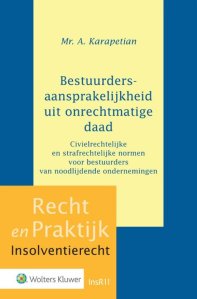 Mr. Arpi Karapetian promoveerde op 14 maart 2019 aan de Universiteit van Groningen cum laude op het proefschrift: ‘Bestuurdersaansprakelijkheid uit onrechtmatige daad. Civielrechtelijke en strafrechtelijke normen voor bestuurders van noodlijdende ondernemingen’. Deze post bespreekt het onderzoek en gaat in op enkele conclusies m.b.t. het verband tussen het civielrechtelijk en strafrechtelijk normenkader; de beoordeling van selectieve betalingen voorafgaand aan het faillissement; en de beoordeling van de rechtmatigheid van het gedrag van bestuurders bij reddingspogingen.
Het leerstuk van de bestuurdersaansprakelijkheid beslaat een veelheid aan wettelijke en niet-wettelijke regels en beginselen over een breed palet aan onderwerpen. Er zijn naar Nederlands recht (maar zeker ook in andere jurisdicties) verschillende grondslagen van aansprakelijkheid aan te wijzen voor de bestuurder van een vennootschap. Continue reading “Proefschrift A. Karapetian (Groningen) over bestuurdersaansprakelijkheid uit onrechtmatige daad bij noodlijdende onderneming”
The thinking of Hayek and Schumpeter on the efficiency of markets: similarities and differences
In the essay below, Dieter Van Esbroeck, discusses competing theories on market efficiency of Pareto, Hayek and Schumpeter. The different insights in the operations of the market lead to rather diverging policy recommendations to harvest the gains of free competition and efficiency. His essay won the Montaigne-Essay contest of 2019 organized by the Institute for Education in Philosophy and Social Sciences (Ifese).
Interne vermogenssplitsing: van de vennootschapsgroep tot de eenpersoonsvennootschap
“Over de schutting” | Oratie gehouden op 1 april 2019 te Leiden ter gelegenheid van de TPR Wisselleerstoel (3)
Vermogenssplitsing (afgescheiden vermogen en beperkte aansprakelijkheid) biedt, bleek uit een vorige post, evidente voordelen bij een bepaald gebruik in het ondernemingsrecht. Het schoolvoorbeeld is de beursgenoteerde onderneming met vele aandeelhouders.
Is de verklaring voor de positieve waardering van vermogenssplitsing in het ondernemingsrecht dan dit: ‘de voordelen zijn grosso modo groter dan de nadelen’? Dat speelt zeker een rol maar is geen voldoende verklaring. Het eerdere geschetste schoolvoorbeeld van één vennootschap met één handelsfonds en vele aandeelhouders komt in de eenvoudig vorm waarin het werd voorgesteld simpelweg nooit voor. Continue reading “Interne vermogenssplitsing: van de vennootschapsgroep tot de eenpersoonsvennootschap”
Wanneer ben je een onderneming?
Ben je een ondernemer wanneer je online oude fietsen verkoopt? En hoe zit dat dan fiscaal? Continue reading “Wanneer ben je een onderneming?”
De na- en voordelen van vermogenssplitsing
“Over de schutting” | Oratie gehouden op 1 april 2019 te Leiden ter gelegenheid van de TPR Wisselleerstoel (2)
In een vorige post bleek dat het ondernemingsrecht positiever aankijkt tegen vermogenssplitsing (beperkte aansprakelijkheid en afgescheiden vermogen) dan het privaatrecht.
Laten we dit vooropstellen: de traditionele weerzin tegen vermogenssplitsing is volkomen te begrijpen. De nadelen van beperkte aansprakelijkheid en afgescheiden vermogen zijn evident.
Wie geniet van beperkte aansprakelijkheid wordt verleid tot roekeloos gedrag. Hoog rendement gaat vaak samen met een groot risico. Beperkte aansprakelijkheid laat toe om het rendement zelf ten volle te genieten en het risico grotendeels af te wentelen op derden. Als de vennootschap insolvent is kan de aandeelhouder de sleutels afgeven aan de schuldeisers en zonder verdere aansprakelijkheid vertrekken. Beperkte aansprakelijkheid stimuleert een activiteit, heet het vaak. Dat is juist, maar het recht is er net vaak op ingesteld om activiteiten af te remmen, bv. als het negatieve effecten voor derden heeft. Aansprakelijkheid zorgt ervoor dat het rechtssubject deze externaliteiten internaliseert en er terug rekening mee houdt in zijn gedrag. Beperkte aansprakelijk kan deze internalisering ongedaan maken.
Ook het afschermen van activa van schuldeisers laat toe om te ontkomen aan aansprakelijkheid. In dat opzicht zijn beperkte aansprakelijkheid en vermogensafscheiding, hoewel juridisch verschillende technieken, economisch erg gelijkend. Het verschil zit ‘m in de klasse van schuldeisers die getroffen worden: de vennootschapsschuldeisers door beperkte aansprakelijkheid, de persoonlijke schuldeisers door vermogensafscheiding.
Zich onttrekken aan aansprakelijkheid is problematisch omdat aansprakelijkheid de belangrijkste remedie is die de jurist in zijn of haar gereedschapskist heeft. Continue reading “De na- en voordelen van vermogenssplitsing”
Invoeringswet WVV gepubliceerd
In het Belgisch Staatsblad van vandaag (2019-04-04) verscheen de Wet van 23 maart 2019 tot invoering van het Wetboek van vennootschappen en verenigingen en houdende diverse bepalingen (blz. 33239).
Het WVV als middel tegen terreur: strengere transparantieverplichtingen voor VZW’s en stichtingen
Nog voor de goedkeuring van het nieuwe Wetboek van vennootschappen en verengingen (WVV) werd er in de Kamercommissie Handels – en Economisch Recht al een wetsvoorstel ingediend tot wijziging van datzelfde WVV. Concreet voorziet het wetvoorstel in een algemene verplichting voor VZW’s en stichtingen om hun jaarrekening bij de NBB neer te leggen en de verplichting om alle inkomende en uitgaande giften te registreren.
Het ingediende wetsvoorstel beoogt meer transparantie te verkrijgen inzake de financiering van VZW’s, IVZW’s en stichtingen en is bedoeld als een anti-terreurmaatregel. Hoewel het goedgekeurde WVV hierover geen woord rept, hebben een aantal volksvertegenwoordigers alsnog een wetsvoorstel ingediend om hier aan tegemoet te komen. Continue reading “Het WVV als middel tegen terreur: strengere transparantieverplichtingen voor VZW’s en stichtingen”
Seminarie over Coase, Buchanan en Becker
Zaterdag 27 april 2019 organiseert het Instituut voor Filosofische en Sociaal-wetenschappelijke Educatie (Ifese) een seminarie over Law and Economics. Tijdens dit seminarie kunnen de deelnemers teksten van de hand van Ronald Coase, James Buchanan en Gary Becker bediscussiëren onder begeleiding van em. prof. dr. Boudewijn Bouckaert. De activiteit zal plaatsvinden in Antwerpen.
Teksten
- R. COASE, “The problem of Social Cost“
- J. BUCHANAN, “The Constitutional Imperative” (hoofdstuk 1 in Reason of rules)
- G. BECKER, “Crime and punishment: An Economic Approach“
Waarom wordt vermogenssplitsing anders gewaardeerd in het burgerlijk en het ondernemingsrecht?
“Over de schutting” | Oratie gehouden op 1 april 2019 te Leiden ter gelegenheid van de TPR Wisselleerstoel (1)
Wie een handboek burgerlijk recht uit de 19de eeuw openslaat krijgt een zeer duidelijk beeld. Alle goederen van een persoon gelden als onderpand voor het nakomen van al zijn schulden. Het is daarbij niet toegelaten om, buiten de wet om, rond bepaalde goederen een schutting te plaatsen en die af te schermen voor bepaalde schuldeisers of net voor te bestemmen voor bepaalde schuldeisers. Vermogenssplitsing door middel van beperkte aansprakelijk of vermogensafscheiding kan een persoon niet zomaar zelf opzetten. In de Frans-Belgische traditie wordt dit meestal zo uitgedrukt: elke persoon heeft één en slechts één vermogen. Vermogenssplitsing wordt scheef bekeken.
Wat is het beeld op in de 21ste eeuw? Wel dat is op het eerste zicht verrassend gelijkaardig. Het voornoemde adagium wordt nog altijd als principe vooropgesteld. Zeker de rechtsorde heeft sindsdien meerde figuren erkend die gelden als een afgescheiden vermogen, zoals een maatschapsgemeenschap, een kwaliteitsrekening of een onverdeelde boedel. Overigens nooit zonder een hevige strijd en voor sommige van die figuren zijn er nog eilandjes waar achtergebleven weerstanders moedig doorstrijden.
Het principe en de dwingendrechtelijke aard van dit principe zijn echter nauwelijks betwist. Het nieuwe ontwerp van goederenrecht dat werd ingediend in de Belgische Kamer bevestigt het dan ook.
Deze oppervlakkige continuïteit verschuilt echter een langzame maar ingrijpende tectonische verschuiving. Continue reading “Waarom wordt vermogenssplitsing anders gewaardeerd in het burgerlijk en het ondernemingsrecht?”
“Het insolventierecht permanent in de steigers”
Oratie door Professor Eric Dirix bij toelating tot het emeritaat beschikbaar
Bij Intersentia verscheen in de reeks Acta Falconis de oratie die Professor Eric Dirix uitsprak bij de toelating tot het emeritaat: Het insolventierecht permanent in de steigers. Deze oratie is ook hier te consulteren via de website van de Leuvense Faculteit der Rechtsgeleerdheid. Het boekje bevat ook de laudatio uitgesproken door Professor Vincent Sagaert.
Opmerkelijk in deze rede is het pleidooi voor een minder aandeelhoudersvriendelijk insolventierecht: Continue reading ““Het insolventierecht permanent in de steigers””
European Parliament approves rules on business insolvency and second chance
Today, the European Parliament approved the directive on business insolvency and restructuring procedures.
The insolvency framework covers three main measures:
- preventative restructuring framework: that allows companies in financial difficulty to negotiate a restructuring plan with creditors, while maintaining their activity and preserving jobs
- second chance for honest insolvent or over-indebted entrepreneurs, through full debt discharge after a maximum period of 3 years, with safeguards against abuse
- targeted measures for member states to increase efficiency of insolvency, restructuring and discharge procedures, in particular expedient treatment of procedures
The final text also includes guarantees that workers’ rights, such as collective bargaining and industrial action, right to information and consultation, will not be affected by restructuring procedures.
Requirements on the duties of the company director in insolvency proceedings were also introduced. They include regard to the interest of creditors, other stakeholders and equity holders, taking steps to avoid insolvency and avoiding deliberate or grossly negligent conduct that threatens the viability of the business.
Belgische wetgever maakt verregaande controle mogelijk van overeenkomsten en praktijken tussen ondernemingen
Een post door gastblogger professor Evelyne Terryn (KU Leuven)
Op 21 maart 2019 heeft de voltallige Kamer het ‘wetsvoorstel tot wijziging van het WER met betrekking tot misbruiken van economische afhankelijkheid, onrechtmatige bedingen en oneerlijke marktpraktijken’ goedgekeurd. Deze wet is onder de radar gebleven hoewel hij een ingrijpende hervorming inhoudt van het ondernemingsrecht en het verbintenissenrecht en een verregaande controle toelaat van praktijken en overeenkomsten tussen ondernemingen. Continue reading “Belgische wetgever maakt verregaande controle mogelijk van overeenkomsten en praktijken tussen ondernemingen”
The debate continues
In the final hours before the vote on the Preventive Restructuring Framework, the debate continues in full force. Two blog posts have been posted, urging the legislators to carefully reflect upon the proposed text.
The first post is written by prof. dr. M. Brinkmann (“Die relative Vorrangregel aus Art. 11 (1) (c) der Insolvenzrichtlinie: nicht nur untauglich, sondern brandgefährlich!”) and can be consulted here.
The second post (“Puzzling priorities: harmonisation of European Preventive Restructuring Frameworks”) is written by Anne Mennens and can be consulted here.
Who says insolvency law cannot be thrilling?
The Debate on the Preventive Restructuring Directive continues while the vote is near
The message of the post last week on this blog by Professor R.J. de Weijs, A.L. Jonkers and M. Malakotipour of the University of Amsterdam has been replicated by the authors in a Letter to the EP, with a supporting letter by Professor Douglas Baird of The University of Chicago.
Professor Bob Wessels of Leiden has replied to their arguments on his blog.
The draft Directive is up for vote on 27 March 2019.

